
English below
ECUADOR Y ESTUDIOS QUEER DESDE AMERICA LATINA
Es una entrevista realizada a María Amelia Viteri, una de las gestoras de los estudios QUEER en el Ecuador y su visión hacia otra cara de la moneda de la Diversidad Sexo Género Diversa.
¿DÓNDE Y EN QUÉ AÑO SE ORIGINA EL TERMINO QUEER?
Lo Queer empieza en los 80 en EE.UU. como una manera de “dar la vuelta”, trastocar a un término que traducido literalmente al español significa “maricón”, “marica” que se convirtió en una reivindicación política de “¿Soy marica, estoy aquí y qué? Acostúmbrate!. De esta forma se desplazó la discriminación a quienes discriminan, interpelándolos.
Desde ahí nacen los Estudios Queer que yo trabajo que abren un paraguas que trasciende los estudios LGBTI, cuestionando por ejemplo la institucionalidad del aparataje heteronormativo, en el cual entran todos los ámbitos de la vida, toda la organización social del mundo desde que naces y previo a lo que naces permitiéndote incluir en este gran paraguas a cuestionar que es lo hetero. Es decir, se reconocen las identidades sobretodo las sexuales y de género no como estáticas sino como fluidas, es decir el deseo no está centrado o limitado a un deseo, a una práctica, a un tipo de cuerpo ni a una identidad política, no es contingente lo uno con lo otro.
¿DENTRO DE LA ABREVIATURA DE LA COMUNIDAD QUE FUNCION CUMPLE LA Q?
La Q te confronta todas las letras, es decir, es una vertiente anti-identitaria que te descoloca cualquier mirada lineal sobre el cuerpo, más bien abre la posibilidad de pensar en esos cuerpos en todas sus diversidades –étnicas, “raciales”, etáreas, nacionales, etc.- y cómo éstas son manipuladas por los diferentes discursos; lo Queer en su abordaje busca ampliar el abanico de reflexión recordándonos que la construcción socio-cultural humana es mucho más rica y trasciende cualquier categoría; por ejemplo, tantas personas con prácticas y deseos hetero-normados y con familias nucleares que conocen y se enamoran de una persona de su mismo sexo y eso no significa que esta persona deba negar su práctica de amor y deseo anteriores y actuales, no están en disputa. Cómo funcionan los deseos y la sexualidad no se los puede encasillar, tanto en el mundo hetero como del mundo LGBTI.
¿LO QUEER HABLA DE DIVERSIDAD?
Exactamente, diversidades sexo-genéricas y las diversidades dentro de otras categorías tan importantes como son las clases, las razas, las etnicidades, nacionalidades, el status migrante, y te cuestiona por ejemplo que no es lo mismo ser una mujer lesbiana indígena que ser una mujer lesbiana mestiza y urbana. Al ubicarte en esas diferencias también llama la atención sobre los procesos de desigualdades y cómo se construye y se ha construido históricamente la diferencia.
¿CUÁL HA SIDO LA TRASCENDENCIA DE LOS ESTUDIOS QUEER EN EL ECUADOR?
Hemos incursionado desde la academia con trabajo de investigación, de teorización, de activismo académico, he trabajado con mis estudiantes, amigxs y colegas en Ecuador y fuera del país en los puentes entre academia y activismo, entre academia y arte, academia y sociedad civil desde un marco de la Antropología Queer. Ahora mismo estoy co-organizando la Conferencia titulada CAMBIANDO PARADIGMAS 5 en FLACSO, siendo la primera vez que se sitúa esta conferencia mundial en un país hispanohablante y en la región, tendrá lugar en el mes de febrero 20, 21, 22, nos pueden encontrar en fb, twitter como Queering Paradigms 5 y en nuestra página web http://www.flacsoandes.org/coloquioqueer/. Previo a esta Conferencia tuvimos un exitoso Coloquio Queer Internacional, el primero en la región para posicionar temas de trabajo desde este Sur de la Américas tales como las familias, religión y espiritualidad, legalidades, colonialidades, etnicidades, representación, salud entre otros/as. Desde la academia en un cercano trabajo con los colectivos activistas y actores en el campo del arte se ha ido empujando esta discusión para abrir nuevos campos de debate e incursión política; sin embargo, se ha trasladado poco al campo activista aunque existen grupos pensando el activismo desde otros lugares como lo transfeminista que trasciende lo LGBTI.
¿TE CONSIDERAS UNA PERSONA QUEER?
Si definitivamente, es un término además político y fue para mí un término poderoso cuando llegué a los EE.UU. con un bagaje de estudios de género, feministas y LGBTI y me di cuenta que es en la confrontación de la heteronormatividad en donde se puede trabajar críticamente la organización social de la vida mirando cómo se ha construido la misma. Conozco académicxs, militantes, activistas, artistas Queer que problematizan una idea moderna del cuerpo como base de la rigidez de entendimientos sobre lo “femenino”, lo “masculino”. La teorización de la economía política del cuerpo permite teórica, material y políticamente ampliar la audiencia y participación de la sociedad civil bajo lo “queer” pues “ser gay” (y/o lesbiana, trans), está también en constante negociación como es el “ser mujer”, “ser mestiza”, “ser joven”, etc.
¿EL ECUADOR SE PUDE DECIR QUE PASARIA DE SER LGBTI A QUEER?
Más allá del término, de su origen, de su raíz, de su impronunciabilidad, como planteamiento teórico y de reflexión puede ayudar y de hecho, ha ayudado a que se expanda la mirada y una audiencia mayor se sume a este barco en sus diversidades y agendas políticas e ideológicas diversas. Lo complejo en el contexto es que lo queer te plantea una anti-identidad y la reivindicación política en Ecuador como en casi todo el continente está basada en políticas identitarias construidas -por tanto- como fijas. Esto dificulta reconocer la movilidad de “lo queer”, de las sexualidades, de los deseos pues con discursos de odio como los religiosos el hablar de que se “nace gay o lesbiana o trans” permite con mayor facilidad continuar formando parte de esa comunidad y de una familia disminuyendo de muchas formas la penalización (desde varios discursos religiosos se hace un paralelo entre nacer gay con nacer con una discapacidad).
Resalto por tanto que lo queer es anti-categórico y de esta forma no calza como una letra más añadida a lo LGBTI como lo discutimos en la Introducción al dossier de ICONOS “Cómo se piensa lo queer en América Latina” que está disponible en línea. Al cuestionar la funcionalidad de una matriz heteronormada permite buscar alianzas con otros colectivos y luchas en donde las múltiples desigualdadades empiezan con y por este sistema. Al ubicar la construcción jerárquica de “lo femenino” en el centro, violencias contra las mujeres van de la mano con las violencias de género, pensemos en los niños leídos como “afeminados” y discriminados, violentados, torturados por estar más cerca de lo abyecto femenino por tanto catalogados como “gays”. Una mirada crítica desde este aparataje teórico de los Estudios Quee – sin ser la panacea- y de la mano con las Teorías Antropológicas, las nuevas corrientes feministas y una mirada interdisiciplinaria podría empujar una discusión en nuestras sociedades en donde al menos se re-conozcan tanto los orígenes y la episteme de tanto odio y por ello se pueda actuar en su contra, desnaturalizando dicho odio.
++++++++++++++++++++++++++++++++++++++++++++
QUEER STUDIES FROM ECUADOR AND LATIN AMERICA
It is an interview with Maria Amelia Viteri, one of the managers QUEER studies in Ecuador and vision to another side of the coin of Different Gender Gender Diversity.
WHERE AND IN WHAT YEAR TERM ORIGINATING THE QUEER?
The Queer starts in 80 in U.S. as a way to «give back» to overturn a term which literally translated into Spanish means «fagot», «queer» that became a political claim «I’m queer, I’m here and why? Get used to it!. This shifted the discrimination those who discriminate, interpelándolos.
From there born Queer Studies I open an umbrella work that transcends LGBTI studies, questioning the aparataje example heteronormative institutions, which come all walks of life, all social organization in the world since you are born and after allowing you are born in this great umbrella include questioning what hetero. That is, they recognize especially the sexual identities and gender not as static but as fluid, ie the desire not focused or limited to a desire to practice a type of body or to a political identity, it is contingent one with the other.
ABBREVIATION? WITHIN THE COMMUNITY THAT MEETS FUNCTION Q?
The Q confronts you all the letters, ie is an anti-identity aspect disturbs any look you straight on the body, but rather opens the possibility of thinking of those bodies in all their diversity-ethnic, «racial», etáreas, national, etc. – and how they are manipulated by different discourses, the Queer in their approach seeks to expand the range of reflection reminding us that human socio-cultural construction is much richer and transcends any category, for example, many people with practical and desires hetero-regulated and nuclear families who know and fall in love with a person of the same sex and that does not mean that this person should be denied the practice of love and desire past and present are not in dispute. How the sexual desires and they can not be pigeonholed, both in the hetero world as LGBTI.
DID YOU SPEAK OF DIVERSITY QUEER?
Exactly sex-generic diversity and diversity within other categories as important as classes, races, ethnicities, nationalities, migrant status, and such questions will not be the same Indian woman to be a lesbian mixed and urban lesbian. By placing on these differences also draws attention to the processes of inequality and how it is constructed and built historically the difference.
WHAT IS THE SIGNIFICANCE OF QUEER STUDIES IN ECUADOR?
We ventured from the research academy, of theorizing, academic activism, I worked with my students and colleagues amigxs in Ecuador and abroad on the bridges between academia and activism, between academia and art, academia and civil society from a framework for Queer Anthropology. Right now I am co-organizing the conference entitled CHANGING PARADIGM 5 FLACSO, the first time it is placed this global conference in a Spanish speaking country and the region, will take place in the month of February 20, 21, 22, we can find on fb, twitter and Queering Paradigms 5 http://www.flacsoandes.org/coloquioqueer/ on our website. Prior to the conference we had a successful International Queer Colloquium, the first in the region to position items of work from the South Americas, such as the family, religion and spirituality, legalities, colonialities, ethnicities, representation, health and others / as. From the academy in a close work with activist groups and actors in the field of art has been pushing this argument to open new fields of debate and political foray, however, has moved slightly to the field activist groups although there thinking activism from other locations as transcending the LGBTI transfeminist.
WOULD YOU CONSIDER A PERSON QUEER?
If definitely is a political term and was also a term for me when I got mighty U.S. with a background in gender studies, feminist and LGBTI and I realized that it is in confronting heteronormativity where you can work critically the social organization of life watching is built the same. Académicxs know, activists, artists Queer problematizing modern idea of the body as the basis of the rigidity of understandings about the «feminine», «masculine». The theorization of the political economy of the body allows theoretical, materially and politically wider audiences and civil society participation in the «queer» as «being gay» (and / or lesbian, trans), is also in constant negotiation as is the «being a woman», «being mixed», «being young», etc..
ECUADOR DOES SAY THAT COULD HAPPEN IS BEING A QUEER LGBTI?
Beyond the term, its origin, its roots, its impronunciabilidad as theoretical approach and reflection can help and in fact, has helped to expand the look and a wider audience join in this boat in its diversity and various political and ideological agendas. The complexity in the context that raises you queer anti-identity and political demands in Ecuador as in most of the continent is based on built-identity politics-as thus fixed. This makes it difficult to recognize the mobility of «queerness» of sexualities, desires because with hate speech as religious talk that the «born gay or lesbian or trans» can more easily remain part of that community and of a family in many ways reducing the penalty (from several religious discourses draws a parallel between being born gay born with a disability).
Highlight therefore it’s queer anti-categorical and thus does not fit as a letter to the LGBTI more added as we discussed in the Introduction to the dossier of ICONS «How queer thought in Latin America» which is available online. By questioning the functionality of an array heteronormada allows seek alliances with other groups and struggles where multiple desigualdadades begin with and for this system. By locating the hierarchical construction of «the feminine» in the center, violence against women go hand in hand with gender violence, think of the children read as «effeminate» and discriminated against, abused, tortured by being closer to the abject Women therefore classified as «gay». A critical look from this theoretical aparataje Quee Studies – without being a panacea-and Anthropological Theories hand, new trends and a look interdisiciplinaria feminists could push a discussion in our societies where at least re-know both the origins and episteme of so much hatred and therefore can act against, distorting such hatred.
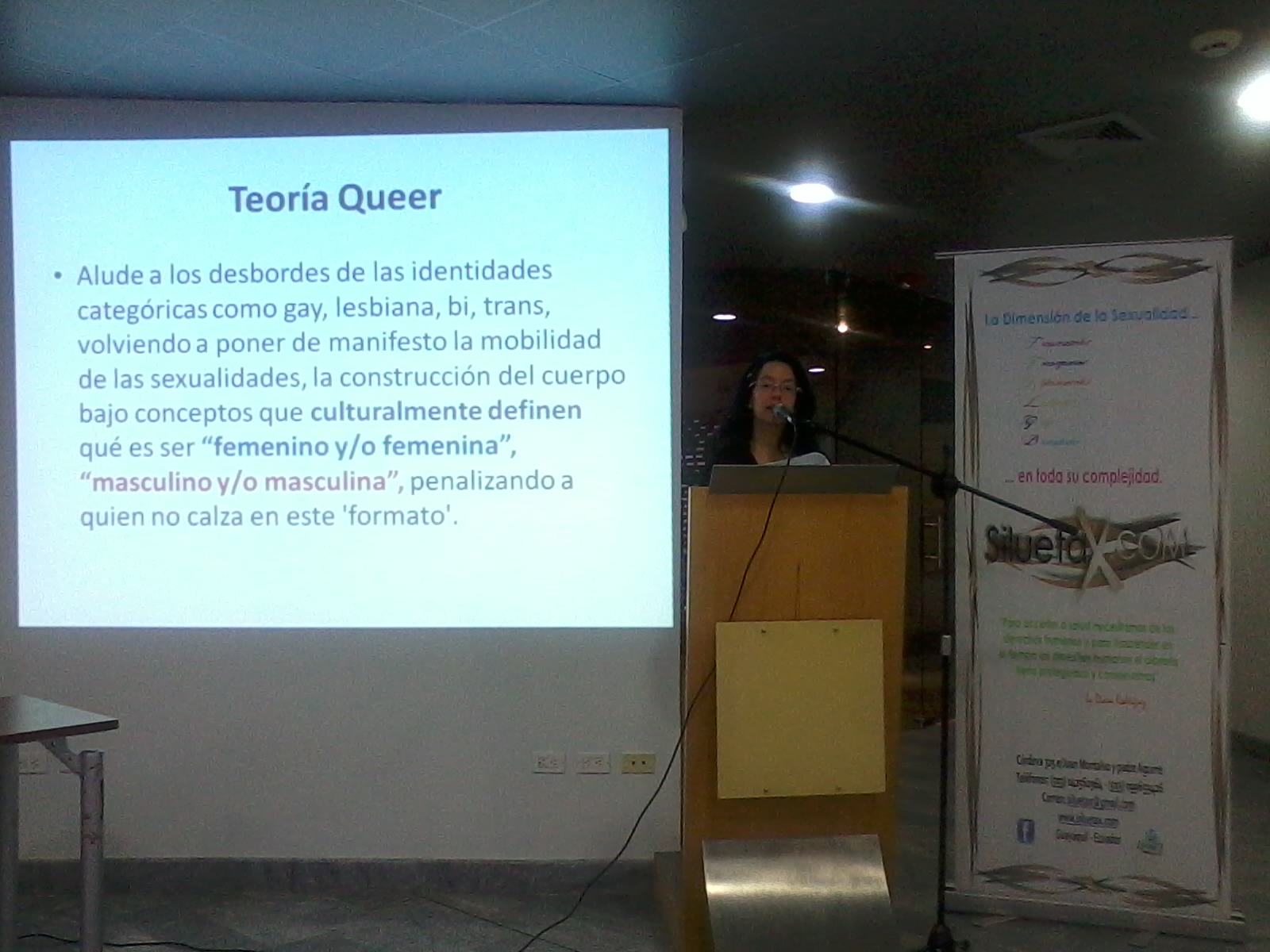
 Asociación Silueta X en Guayaquil y Quito Ecuador