
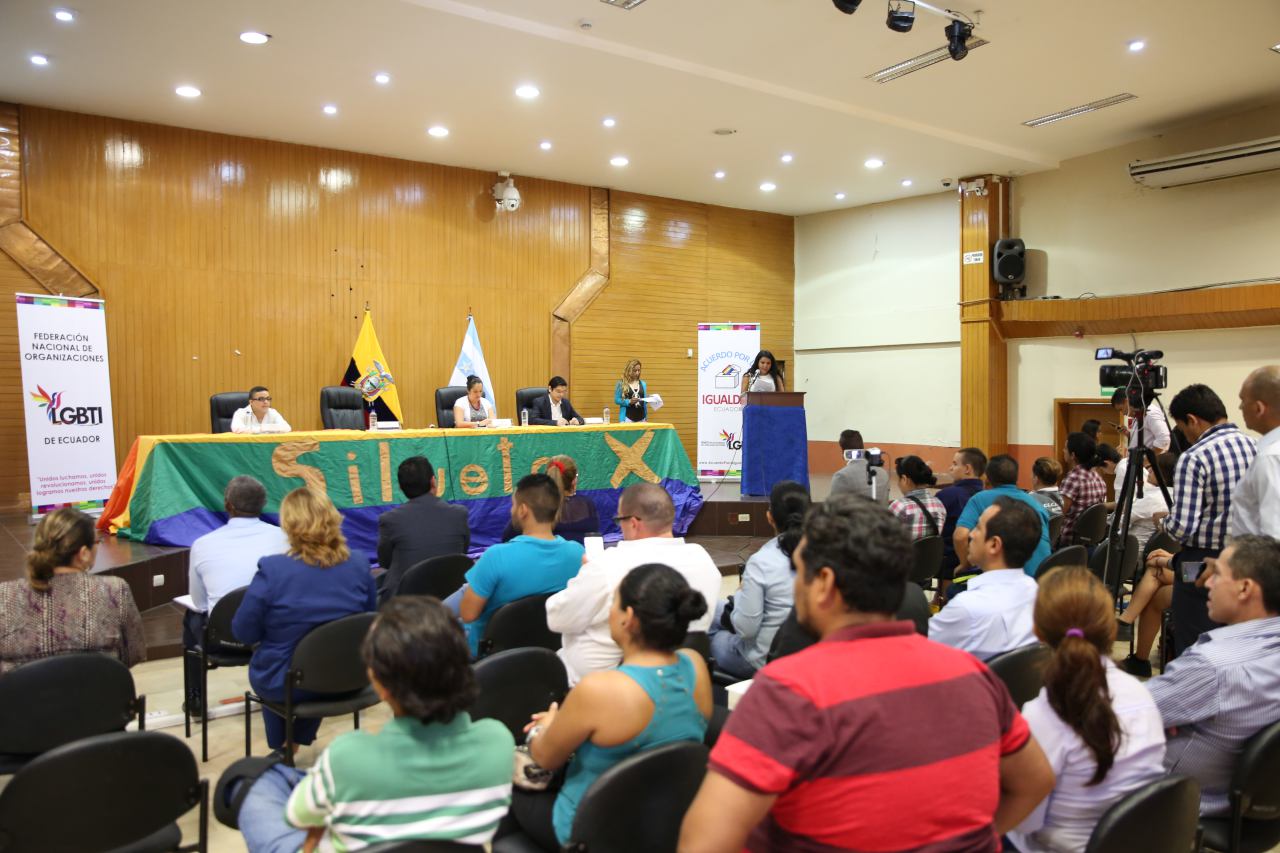
A public record anchored by Ecuador’s electoral authority
The National Electoral Council officially recorded the September 2016 launch of “Acuerdo por la Igualdad Ecuador” in Guayas and described its purpose as encouraging participation in support of a more inclusive society. The event concluded with a commitment on LGBTQ+ inclusion in political organizations.
More than endorsements or candidate photos
A civic framework for measuring electoral inclusion
Across successive election cycles, the campaign evolved into a broader accountability model that examines both political representation and the treatment of LGBTQ+ communities in elections.
01 · Political speech
What candidates say
Track whether candidates address LGBTQ+ people with inclusion, silence, hostility, misinformation or discriminatory rhetoric.
02 · Policy
What government plans contain
Review whether health, education, employment, justice, citizenship and non-discrimination appear in party and candidate platforms.
03 · Accountability
Past actions vs. campaign promises
Compare what candidates promise during elections with their previous public actions concerning LGBTQ+ rights.
04 · Representation
Who gets to run
Document whether parties include openly LGBTQ+ people as candidates, leaders or members of political decision-making structures.
05 · Equality pledge
Put commitments on the record
Invite candidates and political organizations to publicly commit to LGBTQ+ inclusion so those promises can be revisited after election day.
06 · Electoral hate
Document discrimination
Record anti-LGBTQ+ campaign rhetoric and, when appropriate, pursue public, institutional or legal accountability.
A model sustained across election cycles
From signed commitments to political data
2016 · National launch
The electoral authority becomes an institutional witness
The National Electoral Council documented the campaign launch and the signing of an LGBTQ+ inclusion commitment with political organizations in Guayas.
2017 · Presidential election
The pledge reaches national presidential politics
Later media coverage recorded that presidential candidate Lenín Moreno had signed the agreement in 2017, showing how the mechanism expanded beyond its original launch.
2019 · Local elections
Mayoral candidates in Quito and Guayaquil sign public commitments
National media documented Luisa Maldonado, candidate for mayor of Quito, and Jimmy Jairala, candidate for mayor of Guayaquil, signing an equality agreement covering health, education, employment and access to justice for LGBTQ+ people.

2021–2023 · Electoral accountability
When monitoring moves from communication to institutional action
Silueta X and allied organizations documented discriminatory electoral rhetoric and, in selected cases, pursued complaints or legal action. The model therefore linked voter information with the broader question of political violence and accountability.
2025 · Measuring the LGBT+ vote
From asking candidates questions to asking voters
The initiative released a national voting-intention survey of LGBTQ+ people and allies. Media coverage reported 1,598 respondents and a stated margin of error of ±2.9%, covering voting intention, perceived inclusion and policy priorities.
Methodological note: this was a survey promoted by the initiative and affiliated organizations. It should not be presented as an official National Electoral Council poll or as representative of all Ecuadorian voters.
2025 survey coverage →
Why this matters internationally
An Ecuadorian case study in LGBTQ+ political power, inclusive democracy and electoral accountability
International democracy organizations increasingly describe LGBTQ+ political participation not as a niche equality issue, but as part of democratic resilience: who can run, who can vote safely, whether parties represent the population they serve, and whether hate can be used as an electoral strategy without accountability.
Representation
LGBTQ+ candidates and elected leaders
The campaign asks political organizations to move beyond symbolic inclusion and open real pathways for LGBTQ+ people to seek and hold public office.
Parties
Institutional inclusion
Candidate lists, internal leadership and government plans reveal whether parties treat LGBTQ+ participation as structural or merely electoral branding.
Elections
Hate speech and democratic integrity
Anti-LGBTQ+ rhetoric is documented as an electoral issue because hostile campaigns can restrict equal political participation and normalize political violence.
International bridge: LGBTQ+ Victory Institute now operates a Political Participation Observatory for Latin America and the Caribbean and in 2025 published Democracy Demands Equality, mapping LGBTQ+ political-participation strategies across 29 countries. Outright International, Synergía and IFES run the GLIDE initiative on LGBTQI+ inclusive democracy, while NDI frames meaningful participation by historically marginalized communities as essential to durable democratic systems. Ecuador’s Equality Pledge — LGBT+ Vote belongs naturally in that international conversation as a documented national case study.
Evidence, not ownership claims
A regional democratic practice can have many local histories
Other Latin American LGBTQ+ organizations have also asked candidates to sign commitments, monitored elections or promoted LGBTQ+ political representation. Publicly available evidence does not establish that those initiatives copied the Ecuadorian campaign. What can be documented is the distinctive continuity and combination of tools developed in Ecuador across multiple election cycles.
Distinctive Ecuador model
Pledges + representation + rankings + complaints + polling
Its historical value lies in combining a formal electoral-authority launch, documented candidate commitments, party and platform review, representation monitoring, anti-hate accountability and voter data over several electoral cycles.
Regional relevance
A case that can be compared and learned from
For regional democracy practitioners, the strongest question is not “who invented the idea?” but which mechanisms actually increased representation, changed party behavior, reduced discrimination or improved voter information.
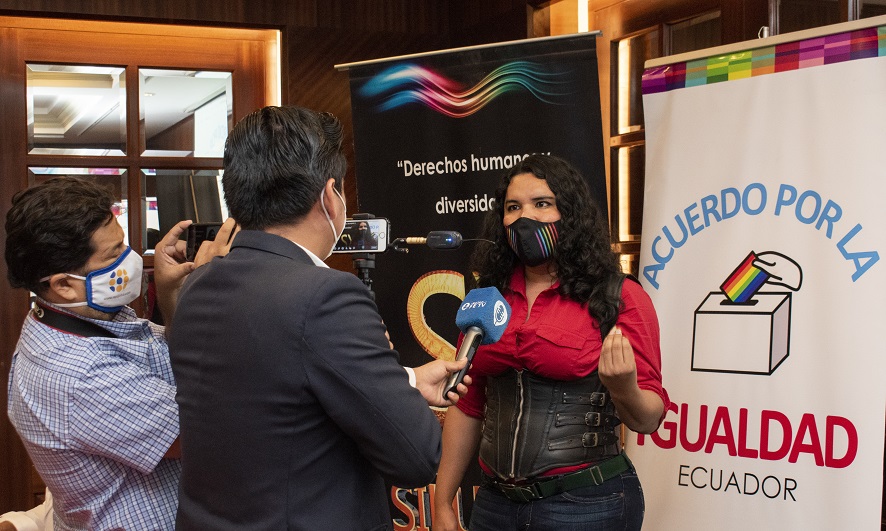
Research · Partnerships · Democracy programs
Use Ecuador as a case study — and help build the next generation of data
Silueta X can provide historical records, election-cycle documentation and institutional context for research or comparative work on LGBTQ+ candidates, party inclusion, voter behavior, political violence and democratic participation in Ecuador.
Sources and external validation

