
Legal Victory · Guayaquil Pride · 2023
When Pride Won Back 9 de Octubre
How a decision by Guayaquil’s municipal government became a court victory for equality, non-discrimination and the right to demonstrate.
In June 2023, Guayaquil’s municipal government decided that the Pride March should no longer follow its historic downtown route and proposed moving it to the Samanes area instead. Organizers did not accept being pushed out of the city center. They defended public space, activated constitutional remedies and marched.
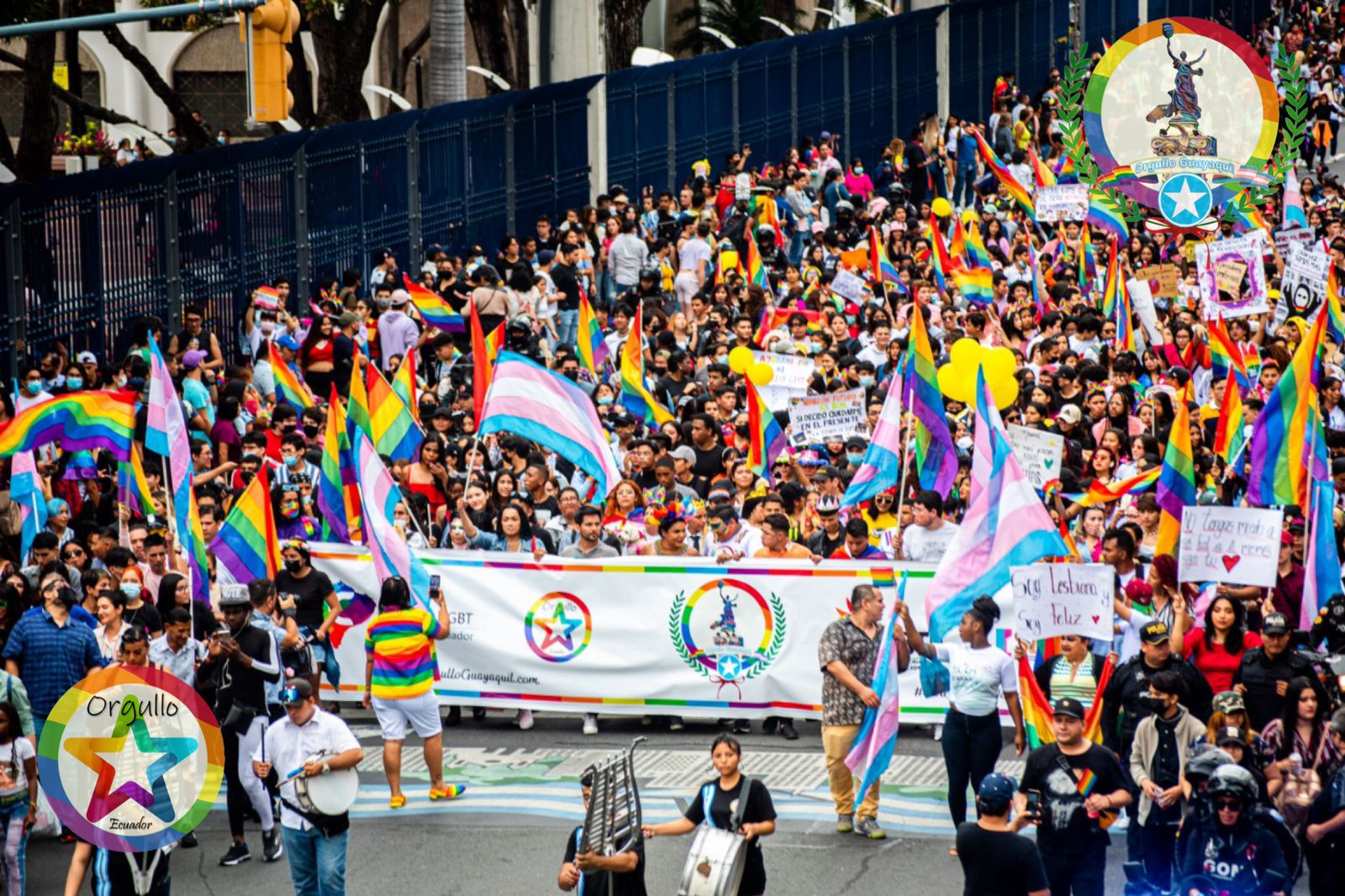
Public space is also a right
Marching on 9 de Octubre was not the same as being sent away from downtown
For organizers, the dispute was never simply about finding another avenue large enough for thousands of people. Avenida 9 de Octubre is part of Guayaquil’s political, commercial and symbolic center and had long formed part of the Pride March route.
The Pride Committee’s historical memory traces an early Guayaquil Pride mobilization to 2000, when participants faced repression. Decades later, occupying downtown still carried political meaning: refusing to be pushed back to the margins.
Organizers therefore understood the proposal to move Pride to Samanes as an attempt to relocate a rights-based public demonstration away from the place where the city could see it, hear it and recognize it.
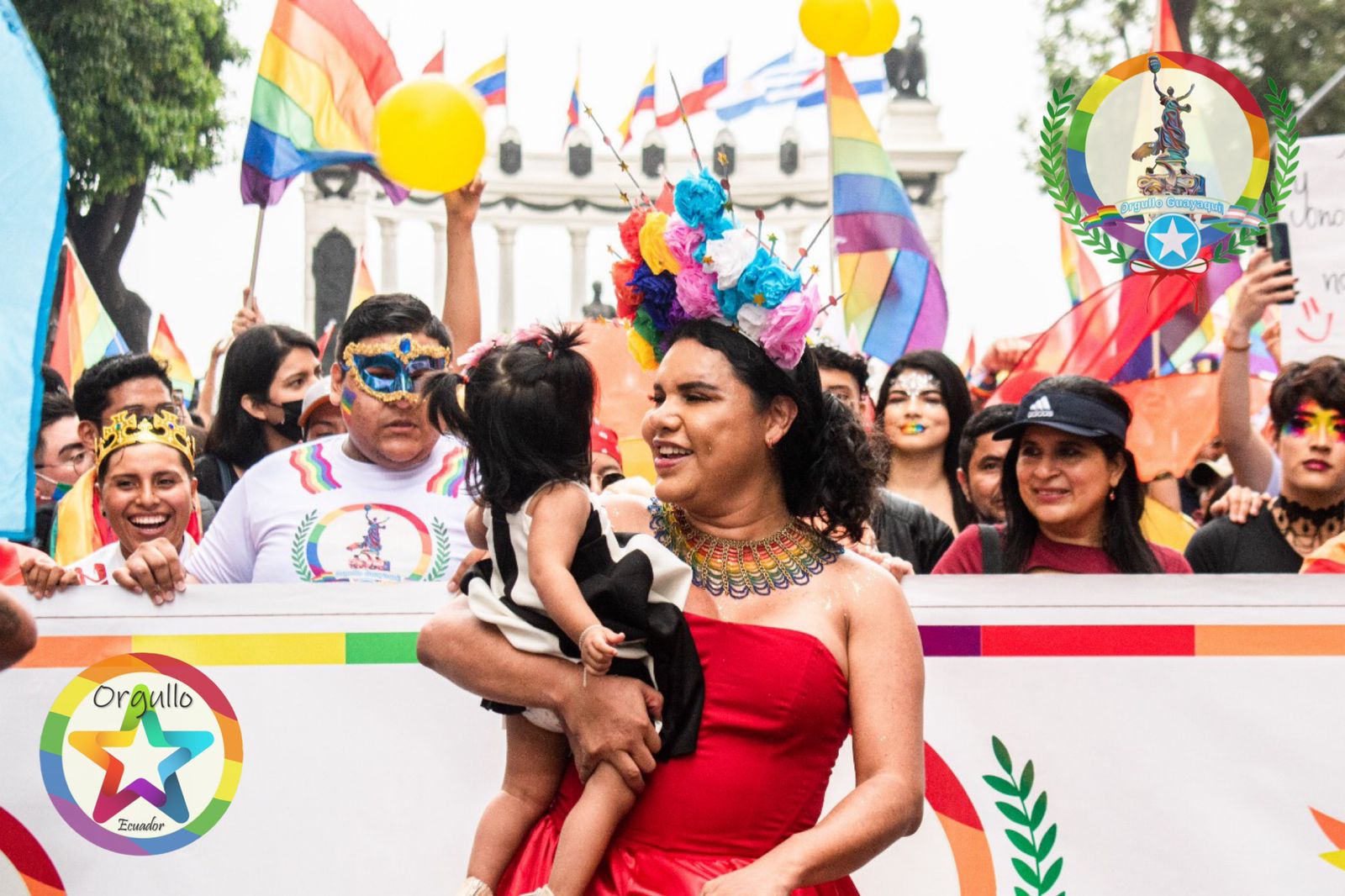
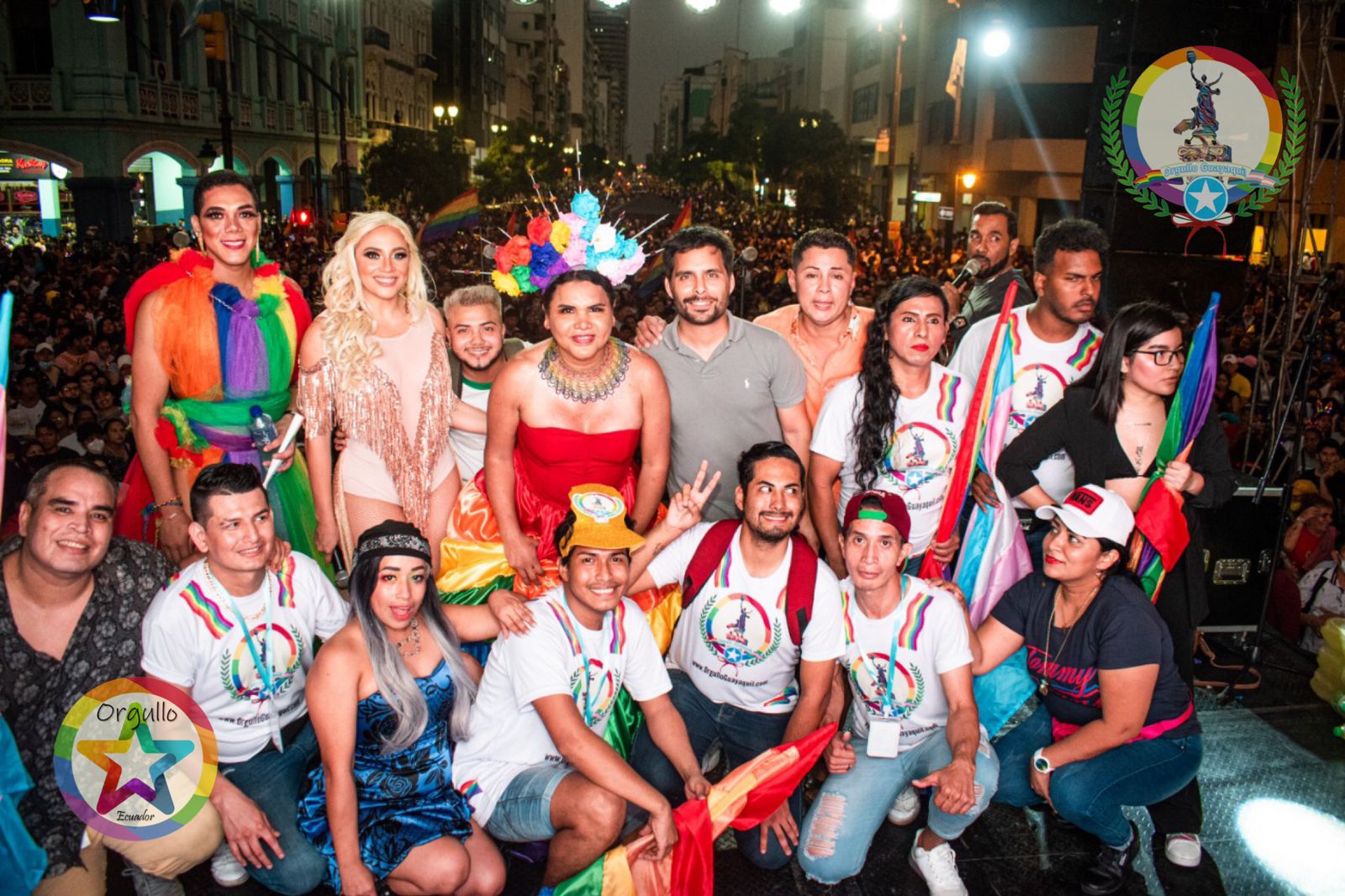
June 15–21, 2023
The city declared the requested route “not viable”
The municipal office responsible for use of public roads argued that the requested route would cause a major impact on vehicle traffic and also objected to portions of the march moving against the normal traffic direction on Avenida 9 de Octubre.
The municipality proposed moving the event to Avenida Paseo del Parque in the Parque Samanes area in northern Guayaquil.
From public protest to constitutional litigation
Silueta X and Guayaquil Pride refused to back down
Within days, an administrative notice had become a national debate about discrimination, public space and constitutional rights.
JUNE 21
The decision becomes public
Guayaquil Pride, Silueta X and allied organizations publicly challenge the decision, defend downtown as Pride’s historic space and warn that moving the event would reduce the political visibility of the march.
JUNE 22
Emilio Sánchez files a constitutional action
Emilio Alejandro Sánchez Medina, then a law student at Universidad Católica de Santiago de Guayaquil, files a constitutional protection action seeking safeguards for the rights of organizations and people planning to participate in the march.
JUNE 23
Asociación Silueta X files its own constitutional action
Asociación Silueta X activates a second constitutional route against the municipal decision, accompanied by organizations involved in Pride. The case sought to overturn the administrative act, guarantee the event and secure remedies and guarantees of non-repetition.
JUNE 23 – JULY 4
As Silueta X challenged City Hall, other actions targeted Pride organizers
Several parallel legal proceedings were directed against Diane Rodríguez, Asociación Silueta X and organizations associated with Pride. Some sought to stop or restrict the event, while others alleged harm to third parties or minors.
JUNE 28
The court rules in favor of Pride
Civil Court Judge Angélica Jimbo grants Sánchez Medina’s action, finds constitutional rights violations, overturns the municipal decision and allows the originally requested route.
JUNE 29 – JULY 1
From the courtroom back to the streets
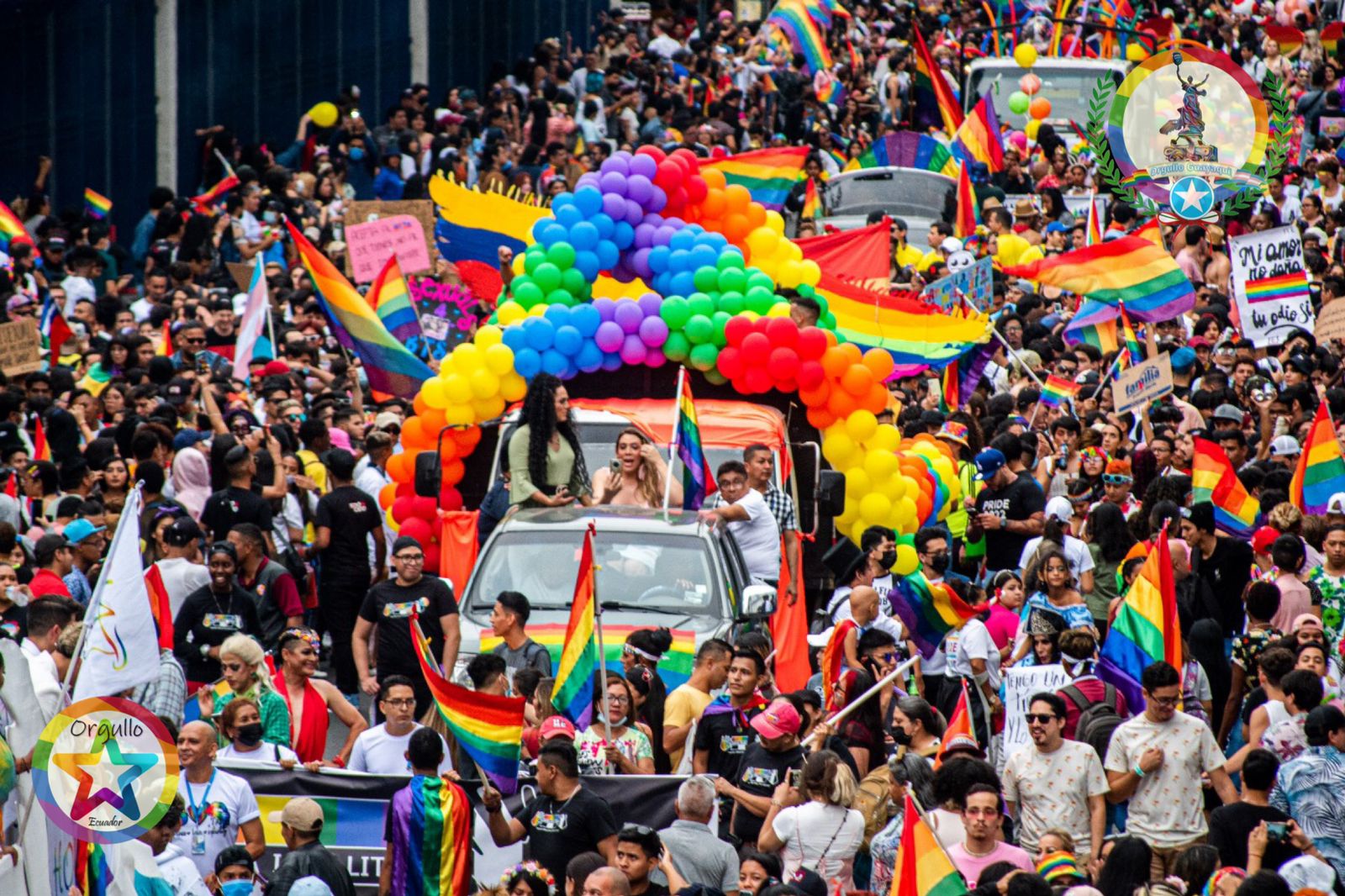
City officials and organizers reach operational agreements. On July 1, the Pride parade takes place downtown with institutional coordination and public protection.
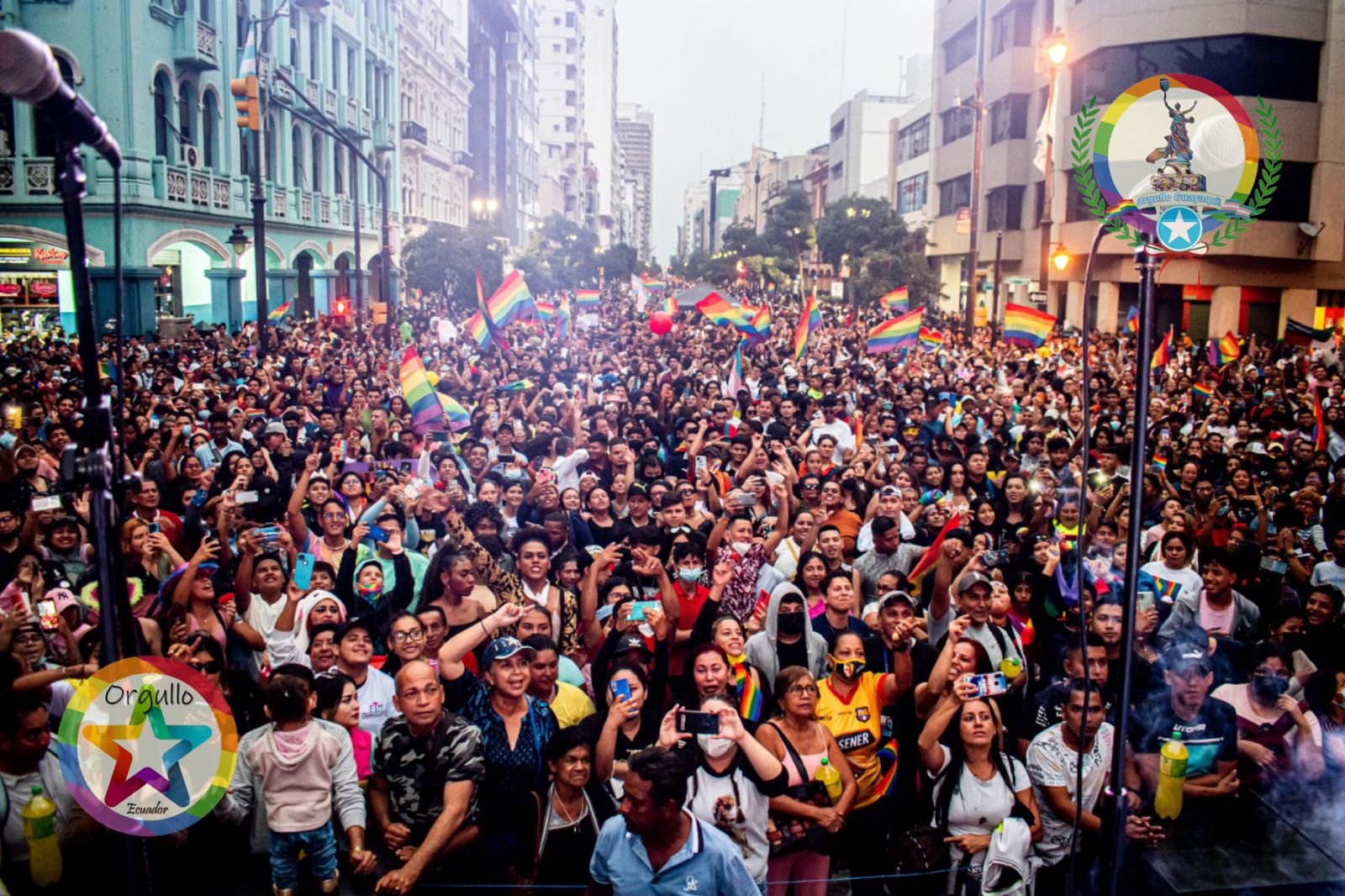
A pattern worth preserving in the historical record
Several proceedings were directed against Diane Rodríguez, Silueta X and Pride organizations
Judicial notices received directly through Silueta X’s institutional email show that while organizers were challenging the municipal decision, other constitutional proceedings began targeting those responsible for organizing Pride.
Case 09572-2023-01816
César Enrique Farías Nieto
He sought precautionary measures against Asociación Silueta X and other Pride organizations. The judicial unit handling violence against women denied the requested precautionary measure.
Case 09281-2023-01661
Benigno Arturo Orellana López
A merchant from Guayaquil’s Bahía district sought measures against Silueta X and several organizations, alleging economic harm from the proposed route. The organizations’ legal defense sought revocation of those measures.
Case 09208-2023-03825
An action filed on behalf of two minors
César Eduardo Benítez Jiménez filed an action against Diane Marie Rodríguez Zambrano in his own name and on behalf of his two minor children. He failed to appear at the hearing and the case was closed following tacit withdrawal.
Were these spontaneous actions, or was there an organized backlash against Pride organizers?
Asociación Silueta X considered the concentration of proceedings within such a short period striking. Several directly named Diane Rodríguez, Silueta X or organizations responsible for managing Pride, and some notifications were delivered directly to institutional email accounts.
Silueta X also considers it relevant that these actions concentrated on people and organizations politically and operationally responsible for Pride, while Emilio Sánchez Medina — whose separate case ultimately produced the favorable ruling against the municipality — was not targeted by the same cluster of actions.
At the time, objections involving minors and alleged nudity at Pride also circulated publicly. Those same themes later appeared explicitly in statements by the municipal administration while negotiating conditions for the event.
Institutional position: Silueta X believes this pattern should be understood within the broader climate of political hostility and pressure facing LGBT+ organizations, particularly trans leaders. However, the records reviewed do not provide documentary proof that the Guayaquil municipal government coordinated or promoted these actions. For historical and legal accuracy, this page records the organization’s concern and the underlying indicators without presenting the allegation as a judicially established fact.
Constitutional Protection Action 09332-2023-10690
Traffic concerns could not justify pushing constitutional rights aside
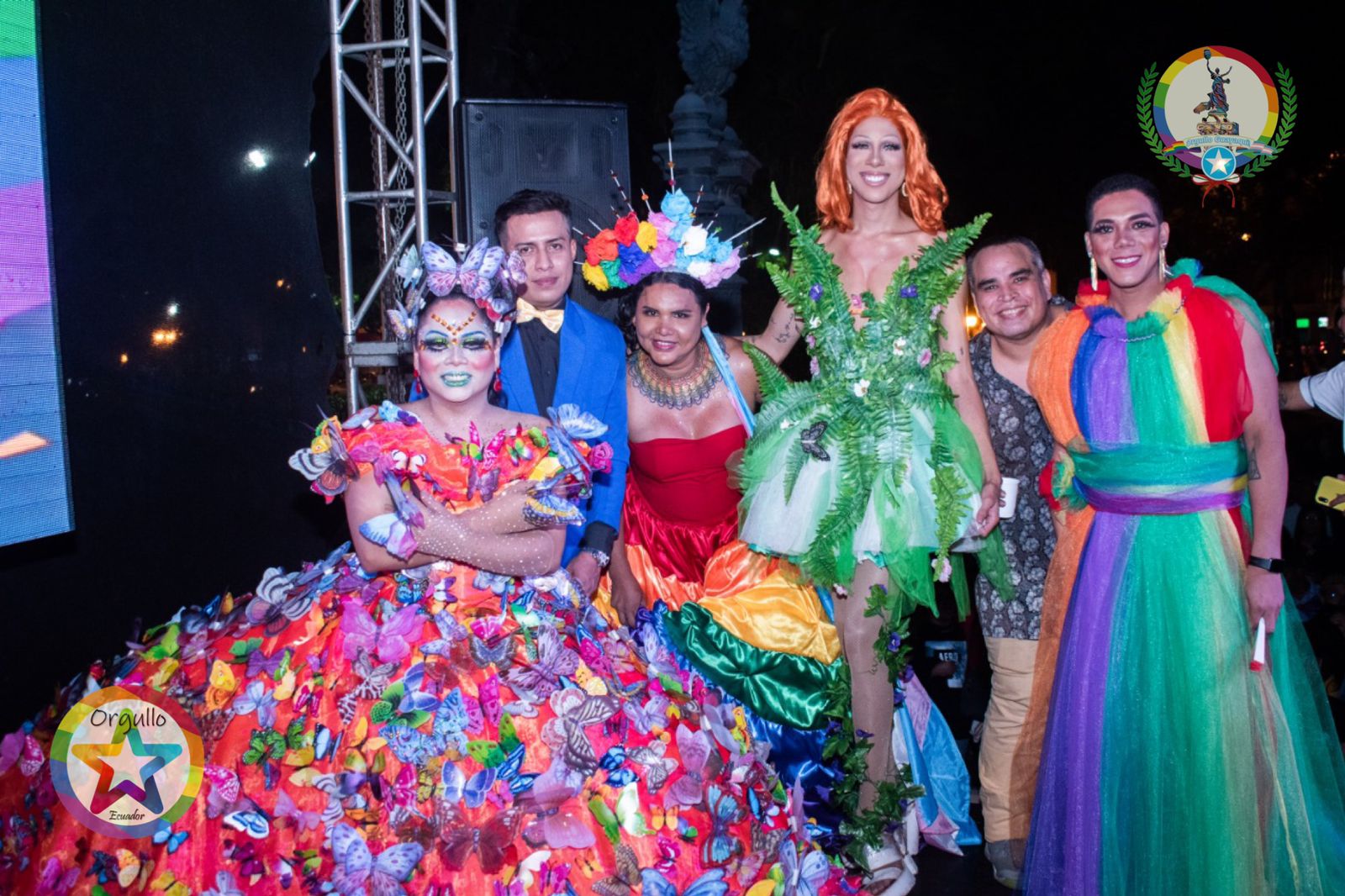
On June 28, 2023, Civil Court Judge Angélica Jimbo concluded that the municipal decision failed the constitutional scrutiny required when government action affects a historically discriminated population.
The court’s central finding
The court found a “direct and indirect violation of the right to equality and non-discrimination.”
The ruling also found that the traffic impact cited by the municipal government did not constitutionally justify restricting the rights to association, peaceful assembly and public demonstration.
Historical attribution
Silueta X was a fundamental part of the process
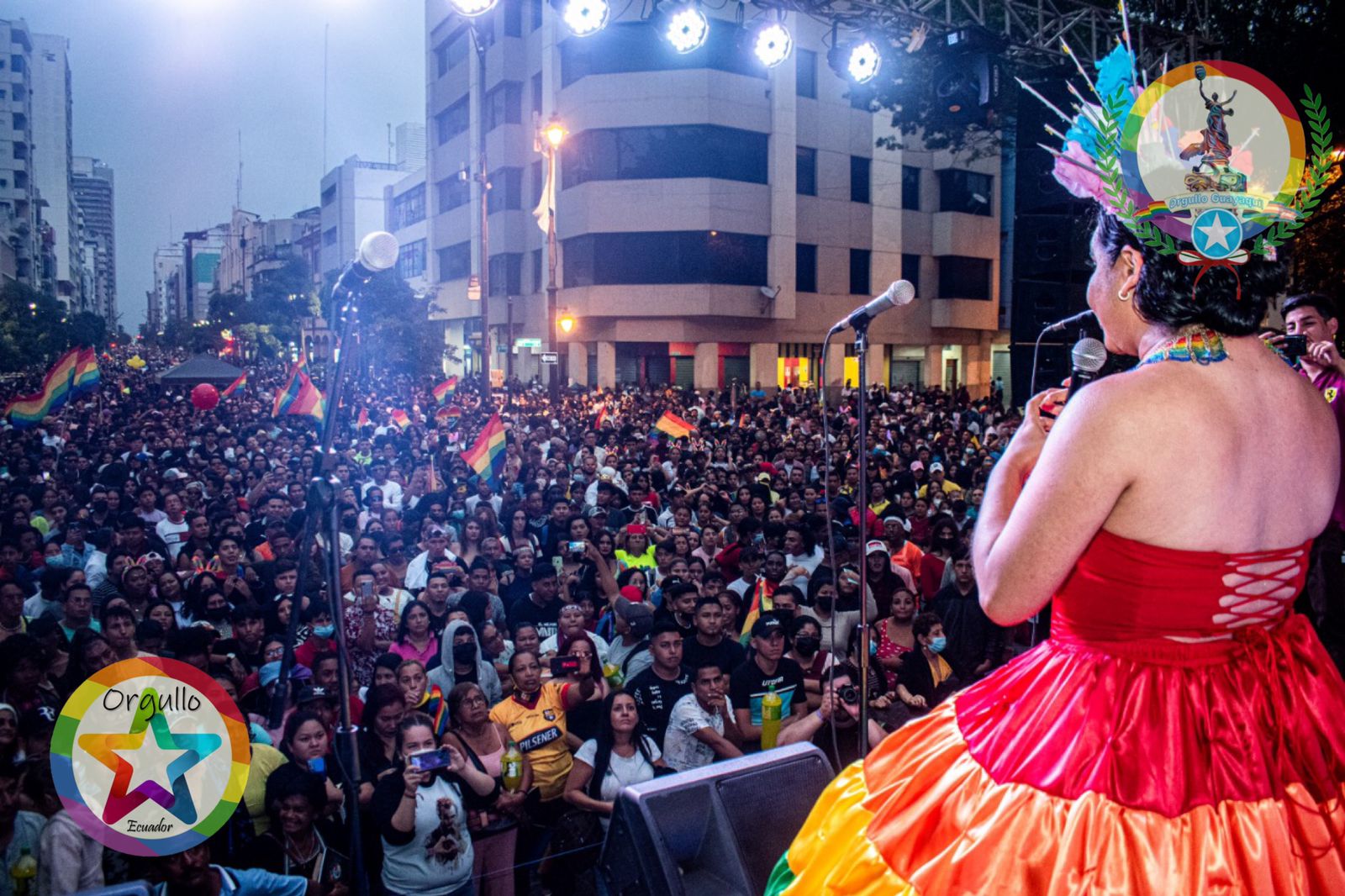
Silueta X is the organization that helped build Guayaquil Pride as an organized process. There is a difference between participating in an event and organizing it. Silueta X was involved in the organizational, administrative, public and legal process before the municipal restriction ever occurred.
Permit management, institutional requests, coordination among organizations, dialogue with public authorities, public defense of the route and the legal response to the municipal government were all part of the same organizing process.
Management
The city responded directly to Silueta X
The request and related administrative proceedings directly linked Asociación Silueta X to the organization and management of the Pride parade.
Organization
Silueta X was not simply a participating organization
Silueta X did not arrive after the controversy to support somebody else’s event. Its structure and leadership were directly involved in building and managing Guayaquil Pride.
Litigation
Silueta X activated its own constitutional defense
The Association filed its own constitutional action against the municipal decision while Emilio Sánchez’s parallel case advanced toward the favorable judgment.
Advocacy
From judgment to negotiation
After the court ruling, Diane Rodríguez participated publicly in negotiations with the mayor to resolve operational details of the parade.
Documentary archive
The victory was preserved in documents
These images are preserved because they are not decorative photographs: they form part of the institutional documentary record of the legal victory.
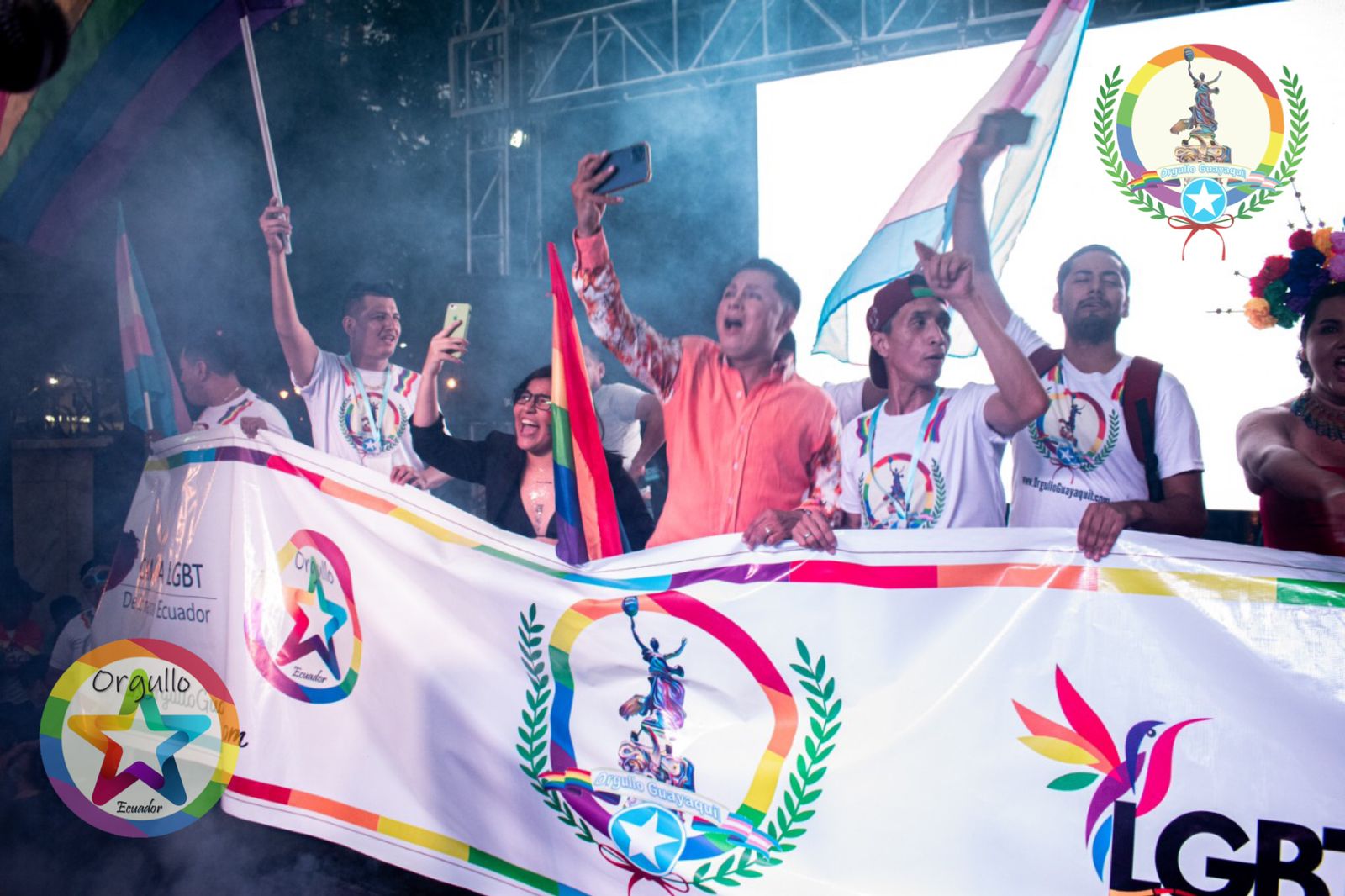
The dispute stopped being merely municipal
The controversy reached national institutions
National Council for Gender Equality
The city had to justify the restriction
The dispute reached the national level and renewed debate over the State’s obligation to guarantee LGBT+ people equal access to and participation in public space.
Ministry of Tourism
Pride also contributes to the city’s economy
The controversy generated national discussion about the positive impact Pride events can have on tourism, hospitality, transportation, commerce and the public promotion of equality.
What remained after 2023
The route was won, but the fight for equal access to public space did not end
The downtown march was authorized again
Pride’s historic route was once again authorized, although the process brought new administrative conditions for organizers.
By then, the 2023 ruling already stood as the immediate reference point: trying to remove Pride from downtown again would mean reopening a constitutional dispute the municipality had already lost.
The march went ahead, but for the first time organizers chose not to hold the traditional festival
The municipal government again authorized the march from Malecón and Olmedo along Avenida 9 de Octubre to Parque Centenario, but refused to authorize the post-march festival in that park and instead designated Plaza Colón.
Organizers put the issue to a public community vote. When voting closed, 531 people had participated: 85% — 451 votes — supported Parque Centenario, while only 15% — 80 votes — accepted Plaza Colón.
The Pride Committee chose to respect that result. Its position was clear: “We will march, but we will not celebrate.” The march took place on June 28, but the traditional festival was not held because municipal authorization for the community’s chosen location was denied.
Silueta X and the Pride Committee argued that continuing to deny Parque Centenario to the LGBT+ community while the space remained available for civic, religious and municipal activities amounted to unequal treatment. In the organizations’ institutional assessment, the decision represented institutional homophobia: not because Pride was prohibited from marching, but because LGBT+ people were subjected to a different standard for accessing public space.
The municipal government could no longer simply push the march out of downtown as it had attempted in 2023. The conflict instead shifted to the site of the post-march celebration. The community responded by giving up the festival rather than accepting a location it had democratically rejected.
Legal precision
It was an important precedent, but not nationally binding constitutional jurisprudence
The judgment arose from a constitutional rights remedy and produced concrete legal effects: it overturned an administrative act, found violations of constitutional rights and restored the march. Its historical and legal significance is substantial, but it is not equivalent to a nationally binding precedent issued by Ecuador’s Constitutional Court.
Media impact
A municipal decision became a national public debate
News coverage followed nearly every stage of the conflict: the municipal restriction, organizational resistance, public polarization, constitutional actions, proceedings against organizers, the favorable judgment, negotiations with the mayor and the eventual march.
Coverage shifted the debate away from the narrow question of where a parade should take place and toward much deeper issues: who has the right to occupy downtown, when an apparently administrative decision can create indirect discrimination, what obligations municipal governments have toward historically excluded populations and how far authorities may go in conditioning a public demonstration.
Sources and archive

