
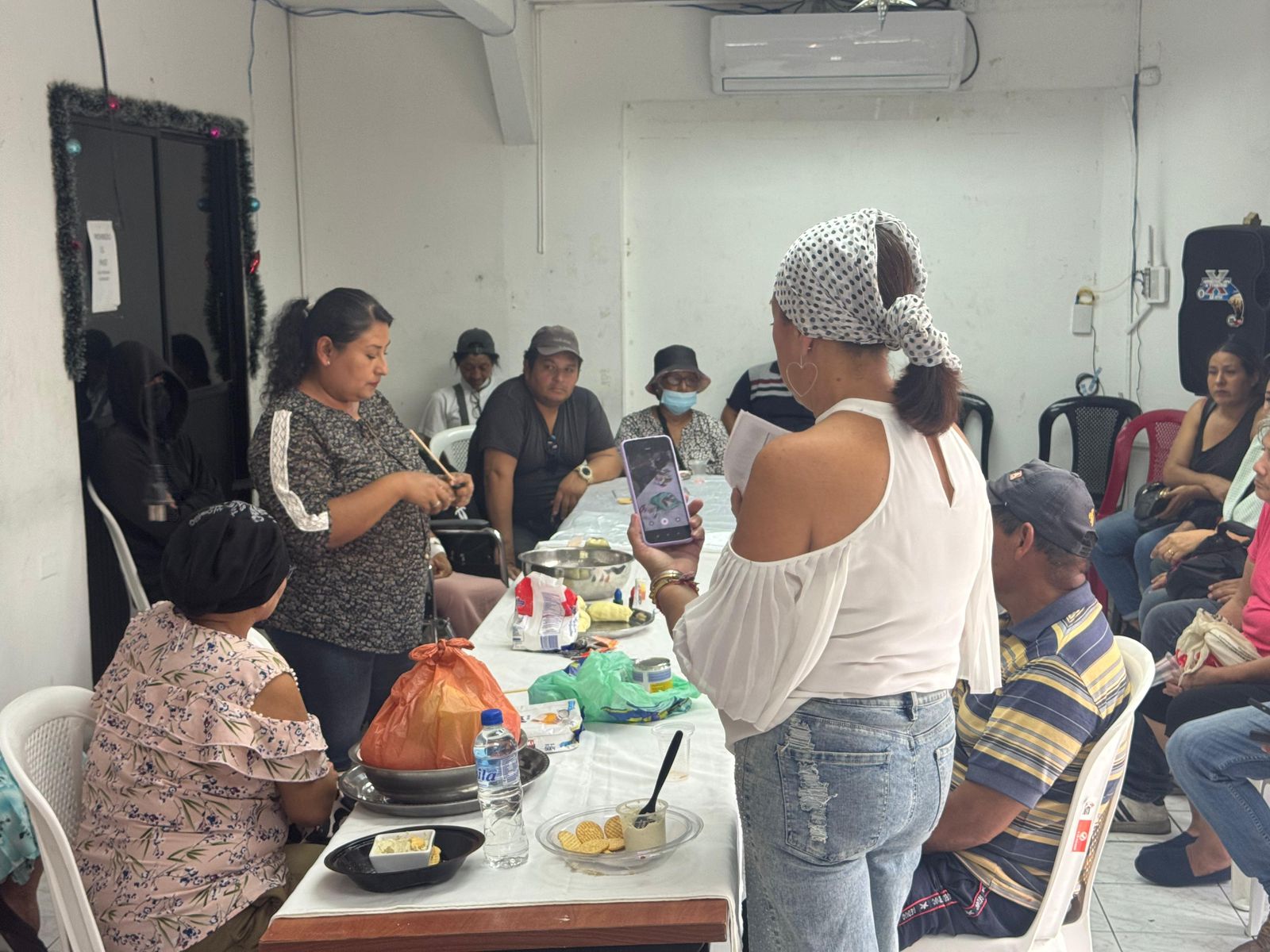
A principle that runs through the program
Economic autonomy should not mean replacing exclusion from employment with an obligation to become an entrepreneur.
Silueta X has long pursued two complementary pathways: strengthening people who want to start or sustain a business while expanding access to formal employment free from discrimination. The goal is greater choice. A skill can become a source of income; a business can become a life project; and decent work should never require someone to hide who they are.
2010 · the documented starting point
A microenterprise proposal brought trans economic inclusion to the Latin America and Caribbean Development Marketplace
Institutional archives and 2010 media coverage document Silueta X’s participation in the Development Marketplace, organized by the World Bank, the Organization of American States and other partners. The project proposed training trans people to develop microenterprises as an alternative to exclusion, poverty and vulnerabilities associated with sex work and HIV.
Selection
560 proposals
Archived documentation indicates that Silueta X was among 14 finalist projects and was subsequently recorded as one of the winning initiatives receiving financial support from the World Bank.
Territorial reach
25 cantons in Guayas
The project organized local promoters and training activities across the province, combining capacity building with community engagement and local awareness-raising.
Program design
Trade skills + business skills
The proposal went beyond teaching a productive skill. Participants received training in accounting, customer service, marketing, advertising, administration and sales before moving into technical specialization.
Forward pathway
Credit access and networks
Documents from 2011 contemplated certification, guidance on access to credit, and the development of a network of trans- and LGBTI-led microenterprises.
Documented vocational pathways
From beauty and personal care to communications, technology and small business
Silueta X’s archive documents a broad range of training opportunities. Some specialties built on skills already present within the community; others sought to open access to different fields. The institutional position expressed as early as 2012 was clear: hairdressing and beauty could be legitimate choices, but they should not—alongside sex work—be treated as the only economic options available to trans people.
Beauty
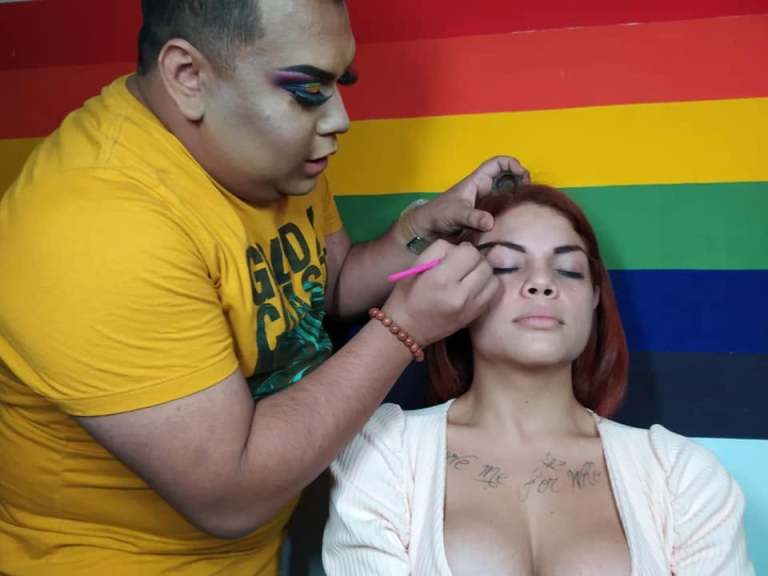
Professional makeup
Application techniques, facial correction, styling, makeup for audiovisual media, and professional-quality practice.
Personal care
Manicure and pedicure
Hands-on training in nail care, cleaning and polish application, integrated into the microenterprise pathway.
Styling
Professional hairdressing and styling
Haircuts, styling techniques and practice oriented toward professional service delivery and self-employment.
Communications
Voice, audition and television
A microenterprise training school included communications and media as a field of professional development for trans and LGBTI people.
Technology
Computer skills development
In 2011, a dedicated space was established to strengthen computer skills among young trans people, anticipating the growing importance of digital capabilities.
Production
Products and food
More recent activities include liquid-soap production, pastry making and decorative sugar modeling, linking practical production skills with income generation.
2012 · economic inclusion in contexts of heightened exclusion
“Mi Pequeña Empresa” (“My Small Business”) also reached incarcerated trans people
In March 2012, Silueta X documented a workshop at the Litoral Penitentiary that provided basic small-business tools to incarcerated trans people. The initiative highlights a dimension that remains relevant today: economic inclusion must also reach people facing multiple barriers to social and economic reintegration.
During the same period, Silueta X’s archive advocated broader educational and professional access so that hairdressing and sex work would not be perceived as predetermined destinations for trans people. That principle continues to shape the program today: recognize existing knowledge without reproducing occupational segregation.
2018–2024 · from entrepreneurship to the right to work
Economic inclusion also requires changing the rules of the labor market
Silueta X’s work evolved from microenterprise training toward an agenda that combines independent income generation, formal employment and safeguards against discrimination.
2018 · advocacy
Employment inclusion proposal
Silueta X presented the proposal “Employment Inclusion Based on Sexual Orientation, with an Emphasis on Gender Identity,” aimed at addressing discrimination and barriers to employment.
2020 · pandemic response
Inclusive economic recovery
Through Centro Psico Trans, with support from Cámara LGBT de Comercio Ecuador, hybrid professional-makeup workshops were delivered for trans, gender-nonconforming and gender-diverse participants.
2022–2023 · public policy
Formal employment and affirmative measures
A national trans agenda developed with Silueta X participation called for mechanisms for social and labor-market inclusion, social protection and legislative progress on the trans employment inclusion proposal.
2023 · production skills
Liquid-soap workshop
Cámara LGBT+ and Silueta X organized a workshop delivered by Instituto IDAE to provide practical production knowledge for entrepreneurship and new sources of income.
2024 · public communication
The realities of trans employment
A collaboration with Perspectiva EC documented lived experiences and structural barriers that limit trans people’s access to decent employment opportunities.
Approach
Entrepreneurship + employment
Economic autonomy is addressed through both pathways: strengthening people’s ability to generate their own income while removing barriers to entering, remaining in and advancing through employment.
2026 · market access and opportunity connections
Knowing how to produce is not enough: people also need to be able to find, buy or hire that talent
Recent activities add two critical dimensions: market spaces for small businesses and connections to employment opportunities, advanced technical training and business networks.

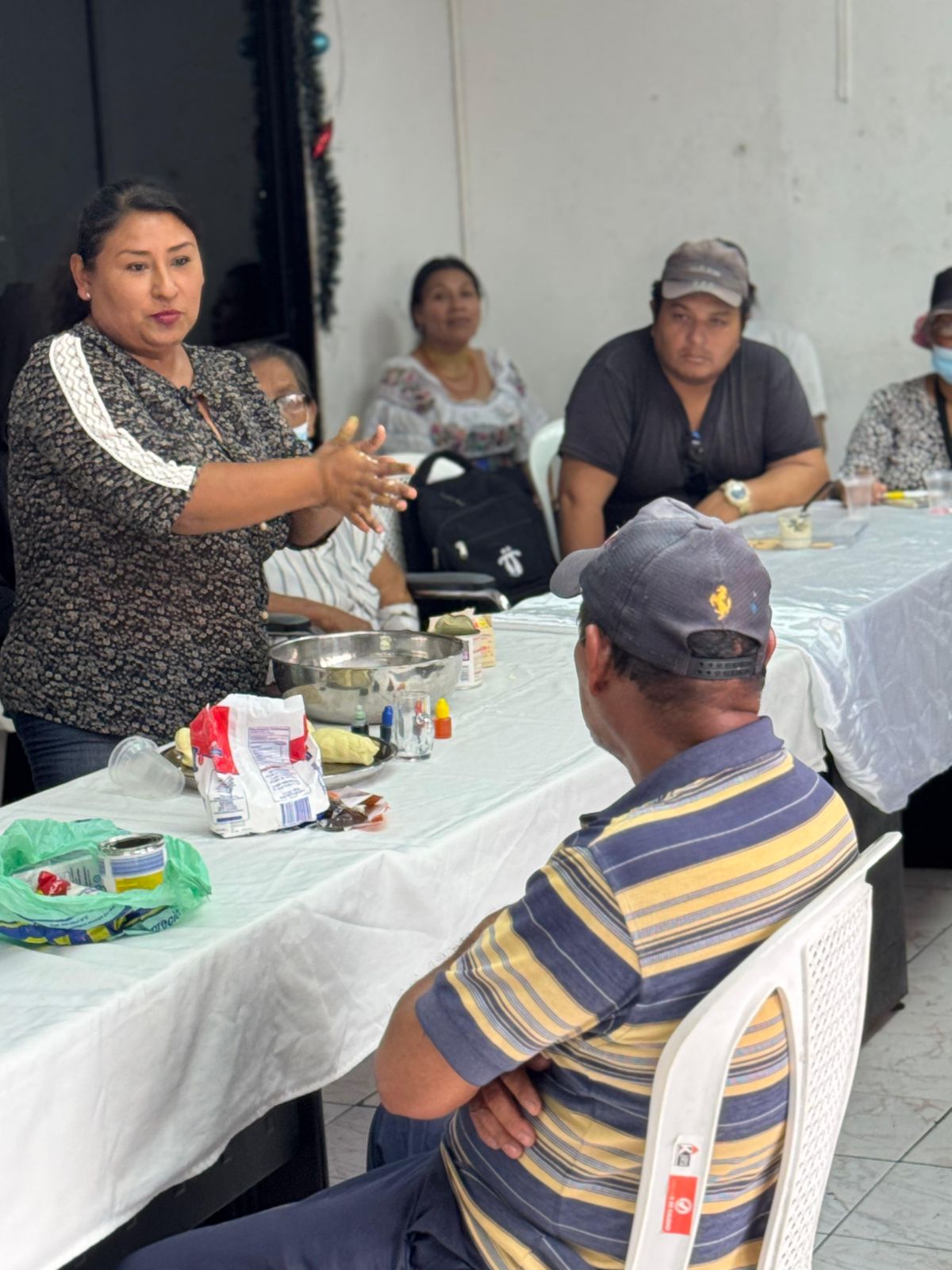
Silueta X documented a technical referral partnership with Cámara Plus’s Emprendedores Plus program for training in management, technology, artificial intelligence and legal formalization. In June, the Inclusive Employment and Entrepreneurship Expo brought together job opportunities, business initiatives, networking and entrepreneur exhibition spaces in a single venue.
Program model
Seven components for turning a skill into a sustainable economic opportunity
The program connects Silueta X’s historical experience with contemporary economic-inclusion approaches: skills development, business management, financial inclusion, market access, decent work, technology and evidence generation.
01 · Skills
Technical and productive training
Practical courses and workshops that turn knowledge into marketable services or products without confining people to stereotyped occupations.
02 · Management
Business, costs and sales
Administration, basic accounting, pricing, customer service, marketing, sales and planning for small businesses.
03 · Finance
Financial inclusion and literacy
Resource management, savings, cash flow, financial readiness and responsible connection to credit or capital options when available.
04 · Markets
Market access and networks
Fairs, showcases, networking, customer connections and preparation to participate in supplier networks or commercial channels through partnerships.
05 · Employment
Decent work and employment inclusion
Connections to opportunities, preparation for recruitment processes, employer awareness and advocacy against discrimination in hiring and retention.
06 · Innovation
Technology, AI and formalization
Digital skills and referrals to technical partners to professionalize operations, adopt technology and strengthen the legal footing of small businesses.
07 · Evidence
Data, rights and public policy
Documentation of economic and employment barriers, follow-up on participant experiences, and translation of evidence into proposals for inclusion, social protection and decent work.
Populations and intersectional approach
Economic exclusion rarely has a single cause
The program prioritizes people whose economic participation may be shaped simultaneously by gender identity, sexual orientation, race, migration or displacement, disability, age, violence, poverty, geography and other inequalities. Recent activities show an expansion from a trans and LGBTIQ+ base toward women in all their diversity and other underserved groups.
Alignment with international frameworks
Economic inclusion requires action on people, markets and institutions at the same time
The ILO documents discrimination against LGBTIQ+ people across the employment cycle. The Inter-American Development Bank combines skills development with engagement with employers to create inclusive workplaces. The World Bank and IFC also frame economic inclusion through access to markets, financial services, entrepreneurship and productive participation. Silueta X’s trajectory converges with this multidimensional approach through community-based experience in Ecuador.
Program development agenda
From stand-alone courses to measurable economic pathways
The program’s next level is to deepen the connection between training, income, formalization, business continuity and access to employment. This makes it possible to assess not only how many people receive training, but what happens afterward to their economic opportunities and capabilities.
Outcome
Income outcomes
Measure changes in income generation and income stability after training while respecting privacy and the diversity of participants’ economic pathways.
Enterprise
Formalization and business continuity
Support the transition from informal initiatives toward more organized economic units and observe their continuity over time.
Market
Inclusive procurement and supplier readiness
Prepare small businesses to engage with companies, institutions and value chains through basic standards for quality, costing and compliance.
Employment
Job placement and retention
Track referrals, hiring, retention and inclusion experiences to identify barriers and effective employer practices.
Digital
Digital commerce and productivity
Strengthen digital presence, productivity tools, security and practical uses of artificial intelligence for small businesses.
Knowledge
Evidence on economic inclusion
Generate data on employment, entrepreneurship, discrimination and economic autonomy that can inform public policy and international cooperation.
Cooperation and partnerships
Community-based experience with room for research, innovation and economic collaboration
Silueta X welcomes collaboration on technical training, employability, financial education, inclusive markets, technology, applied research, supplier inclusion and programs serving communities historically excluded from economic participation.
Institutions and businesses
Partnerships for economic inclusion
For technical cooperation, training, employment opportunities, fairs, employability initiatives, supplier inclusion, research or project development.
info@siluetax.org →Community support
Sustaining opportunity
Individual contributions support Silueta X’s broader work with women in all their diversity, LGBTIQ+ people and other priority communities.
Explore ways to support →Archive and external validation
Sources documenting the entrepreneurship and economic-inclusion track record
Documentation and institutional memory
An economic track record becomes more valuable when it can be reconstructed and verified
This page brings together institutional publications, media coverage and historical records of activities carried out across different periods. It does not assume that every mechanism, partner or credit instrument documented in the past remains available today.
Historical terminology: some sources from 2010–2012 use terminology that reflects their period. Current language prioritizes “trans people,” “LGBTIQ+,” “decent work,” “economic autonomy” and “economic inclusion.”
Program scope: entrepreneurship and employment are presented as complementary options. The program does not treat self-employment as a substitute for the obligation to eliminate workplace discrimination.

