

A programmatic principle
Risk should never be the price of earning a living.
The program begins with a fundamental distinction: consensual sex work between adults must not automatically be conflated with trafficking, sexual exploitation, coercion, third-party exploitation, extortion or violence. Where coercion or exploitation is present, the response must focus on protection and justice. Where an adult chooses to engage in sex work, access to health care, rights and safety must never depend on leaving sex work.
Rights-based approach
No forced rescue. No institutional abandonment.
Silueta X’s historical work has been closely connected to trans women sex workers. The program preserves that experience while applying a framework relevant to adults engaged in sex work across diverse identities, territories and migration contexts.
01 · Autonomy
The person decides
Whether to continue, change or leave sex work should depend on real options and personal choice. Health, protection and justice services are never conditioned on a particular employment or livelihood pathway.
02 · Community leadership
With, not about
The lived expertise of sex workers should shape assessment, design, implementation, monitoring and evaluation. Community engagement is not simply a route to reach people; it is part of program governance.
03 · Freedom from stigma
An occupation does not cancel a person’s rights
A sex worker may also be a mother, migrant, student, leader, person living with HIV, artist, entrepreneur or activist. The program refuses to reduce complex lives to a single source of income.
Documented track record · 2009–2026
More than a decade reaching places formal systems rarely reached
The institutional archive shows continuity across workplace-based HIV prevention, community research, engagement with public authorities, safe community spaces, humanitarian response and violence documentation.
2009–2010 · territorial outreach
Prevention where people work
Historical reports document repeated prevention programs with trans women sex workers, community health initiatives, field placements, needs assessments, HIV workshops and activities in Guayaquil and other municipalities.
2011–2012 · peer education
HIV, rights and community capacity
With support from the HIV Young Leaders Fund and monitoring by Tides Foundation, Silueta X delivered information, education and capacity-building for trans people engaged and not engaged in sex work. The 2012 phase included agreements with public health services and the National Police, as well as training on rights, HIV, STIs and condom use.
2012 · community-based research
Evidence produced with trans communities
Research supported by amfAR examined behaviors, practices, discrimination and HIV-related factors among trans women on Ecuador’s coast. The process included focus groups, researcher training and surveys with trans women sex workers.
2015 · human mobility
Rights across borders
Silueta X’s justice observatory called for action by Chilean and Ecuadorian authorities following reports from Ecuadorian trans women sex workers living in Chile concerning possible third-party exploitation and xenophobia.
2018 · safe community spaces
Sexual health, condoms and reporting mechanisms
Casa Arcoíris offered workshops on rights and sexual and reproductive health, condoms and a reporting system, combining prevention with a community space where people could seek support without concealing who they are.
2020 · public health emergency
Prevention moved into the streets
During COVID-19, Silueta X provided mobile HIV testing and food assistance to trans women sex workers, demonstrating the ability to adapt services when mobility and incomes were severely restricted.
2020–2022 · extortion and protection
A street may be a place of work; it should never become territory controlled through violence
Silueta X documented reports of extortion affecting trans women in sex-work areas of Guayaquil and called for investigation and protection. In 2022, it denounced the killing of Jesica Martínez, a trans activist and advocate for sex workers in Ambato who had previously requested protection.
2024–2026 · intersecting risks
Migration, digital platforms, families and violence
Runa Sipiy has documented killings of trans women sex workers, including migrant women, platform-mediated sex work, extortion and cases in which victims supported children in their care. These records show that safety must be understood alongside human mobility, economic conditions, territory and family networks.
2025 · continuity in the HIV response
Combination prevention and health-sector recognition
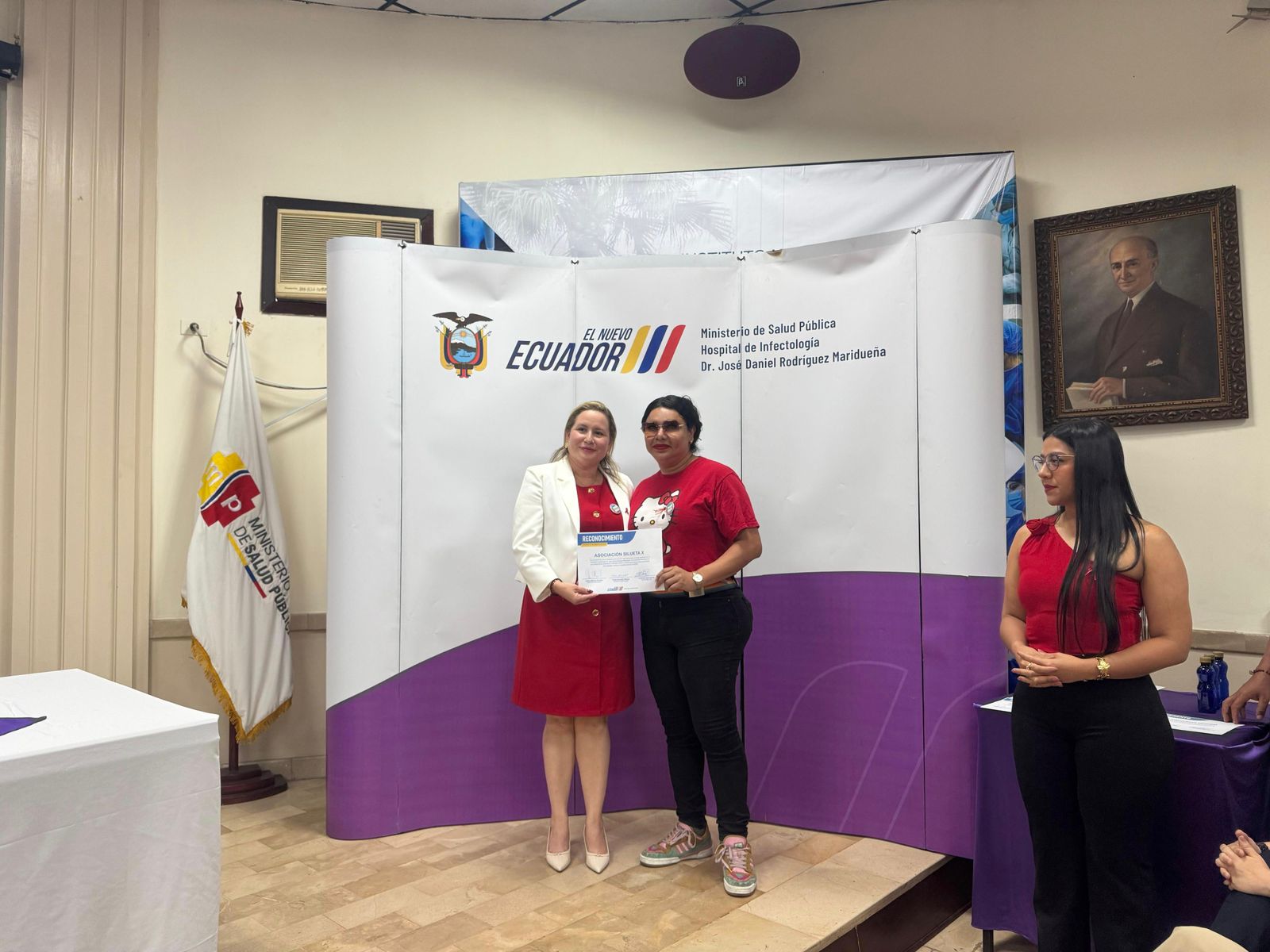
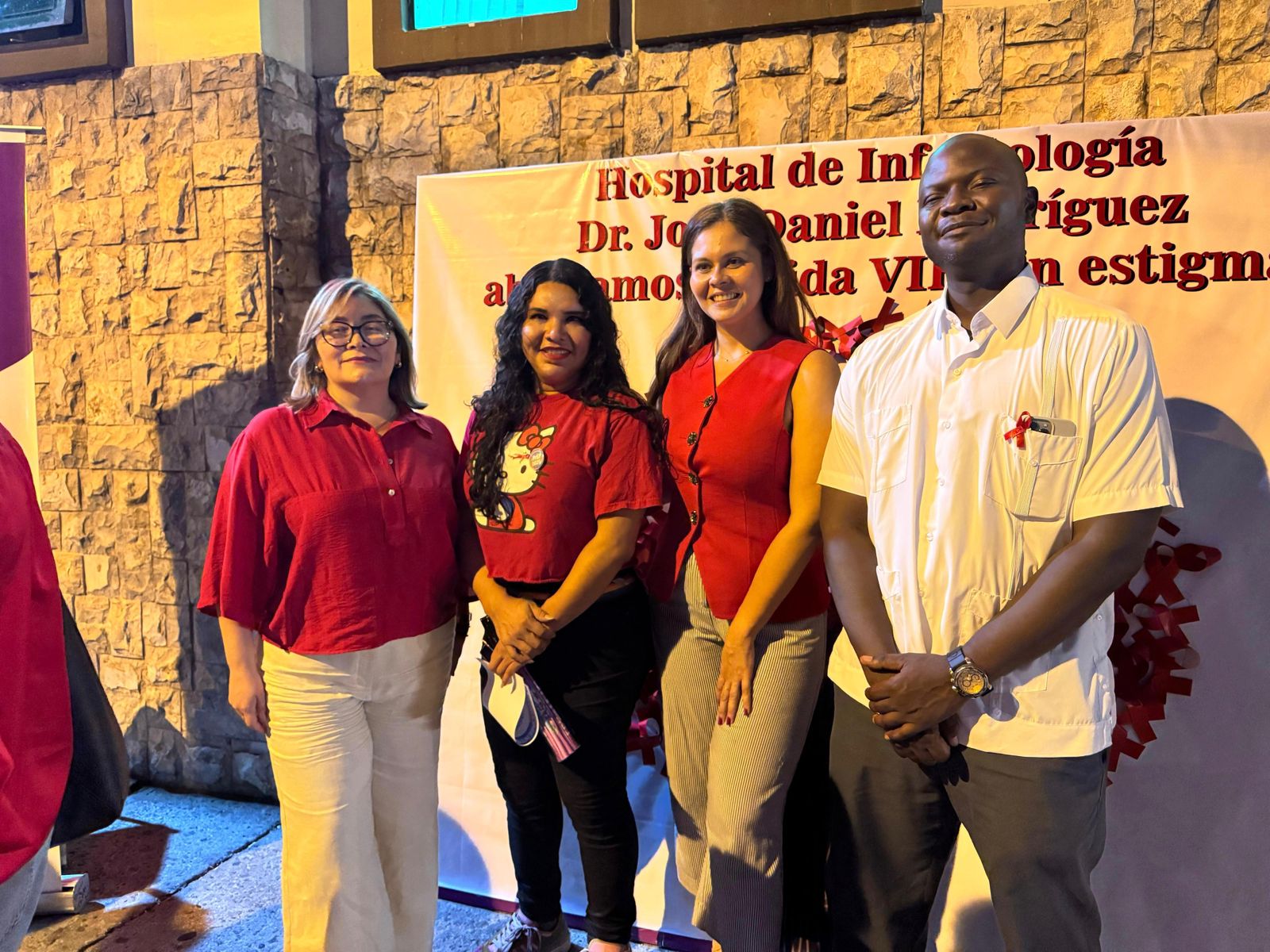
The Dr. José Daniel Rodríguez Maridueña Infectious Diseases Hospital recognized Silueta X’s HIV-prevention work. The institutional record explicitly includes sex workers and strategies such as HIV testing and PrEP within a broader history of combination prevention.


Program architecture
Ten areas ensuring protection does not end where work begins
The program brings health, human rights, safety and economic autonomy around the same person, avoiding fragmented responses.
01 · Community
Peer leadership and outreach
Peer outreach workers, needs identification, community education, supported referrals and meaningful participation of sex workers in program decisions.
02 · Health
Combination HIV and STI prevention
Condoms and lubricants, judgment-free information, HIV testing, STI referrals, access to PrEP and PEP when appropriate, and linkage to treatment and health services.
03 · Safety
Violence prevention, extortion and protection
Community-based risk identification, guidance in response to threats, emergency pathways, secure documentation, protection from extortion and accompaniment in cases of violence.
04 · Justice
Rights and access to justice
Legal literacy, reporting mechanisms, support from Consultorio Jurídico X, documentation of abuse and engagement with authorities without revictimization or discrimination based on occupation or identity.
05 · Mobility
Migration and cross-border protection
Guidance for migrants, referrals to protection services, documentation of xenophobia and violence, support networks and coordination when risks cross national borders.
06 · Digital environment
Safety in platform-mediated sex work
Privacy, digital identity management, doxxing prevention, contact verification, location safety, payment security and responses to deceptive or fake-client schemes.
07 · Well-being
Mental health and psychosocial support
Care responsive to stigma, trauma, violence, grief, stress, gender identity and support networks, coordinated with Centro Psico X and other specialized services.
08 · Economic autonomy
Real options, never forced exit pathways
Voluntary access to training, employment, entrepreneurship and financial inclusion for people who want to diversify or change their income sources, without making other rights or services conditional on leaving sex work.
09 · Emergencies
Humanitarian response and continuity of services
Food assistance, health referrals, continuity of prevention and community support during pandemics, displacement, insecurity and other crises that disproportionately affect income and protection.
10 · Evidence
Community-led research and monitoring
Participatory research, barrier analysis, violence documentation through Runa Sipiy, disaggregated data and evidence to improve services and policy without creating records that unnecessarily expose people’s identities.
Economic autonomy
Real options change a decision. Rights can change a life.
As early as 2010, Silueta X was already connecting employment exclusion, poverty, HIV and sex work through its Development Marketplace proposal. The historical framing focused on leaving sex work. The current program retains the economic lessons while updating the approach: expand meaningful options without using assistance as a tool of pressure.
continuing sex work with better health and safety conditions; combining sex work with other sources of income; or leaving sex work with access to a viable economic pathway.
International program and donor language
Sex worker rights + community leadership + comprehensive health
The program architecture aligns with approaches currently used by global health agencies, multilateral mechanisms and specialized funds: human rights, key populations, community empowerment, community-led services, autonomy, safety and stigma elimination.
References to these frameworks indicate programmatic alignment only. They do not imply funding, accreditation or an institutional relationship with WHO, UNAIDS, the Global Fund or Red Umbrella Fund.
Monitoring, evaluation and learning
Measure access without turning people into a surveillance database
Indicators should improve services and accountability while applying data minimization, confidentiality and community participation in interpreting results.
people reached, territories covered and peer-led activities.
testing, prevention commodities and successful referrals.
threats documented, protection pathways activated and cases supported.
legal guidance, reports filed and access to legal services.
voluntary access to employment, training or entrepreneurship.
confidentiality, respectful treatment, acceptability and reported barriers.
Technical and community partnerships
Trust is also part of health and protection infrastructure
Silueta X can connect research, community outreach, combination prevention, rights, mental health, safety, human mobility and economic autonomy with public institutions, academia, sex worker-led organizations and international cooperation partners.
Health and HIV
Services that meet people where they are
Peer outreach, testing, prevention, supported referrals and barrier reduction for key populations.
Rights and safety
Evidence-informed protection
Documentation of violence, extortion, discrimination and access-to-justice barriers under confidentiality protocols.
Research
Community-led knowledge
Participatory studies on health, livelihoods, violence, migration, digital platforms and service quality.
Archive and sources
A track record that can be verified
Rigor and institutional evolution
Language evolves as evidence evolves
Some historical Silueta X documents use terminology and approaches shaped by their time, including a focus on reducing or leaving sex work. This page preserves those records as part of the institutional history while framing the current program around autonomy, human rights, public health and community leadership.
Historical scope: the public evidence located for this review is concentrated primarily on trans women sex workers. The program does not retrospectively claim extensive work with other groups without sufficient documentation.
Victims and memory: cases of violence are included to document patterns and protection needs; photographs of people who were killed are not used as promotional assets for the program.

