

November 25, 1997: the ruling. November 27: official publication and legal effect.
Ecuador’s Constitutional Tribunal decided Case 111-97-TC and declared the first paragraph of Article 516 unconstitutional. Two days later, the ruling was published in the Official Registry. That is why both dates appear in historical memory and legal sources.
The law that criminalized intimacy
Article 516: when private consensual relationships could become a crime
The first paragraph of the former Penal Code punished consensual homosexual relations between adults with four to eight years of imprisonment. Beyond the number of formal convictions, the existence of the provision reinforced policing, harassment, stigma and a life shaped by secrecy.
Before 1997
Criminalization
The law treated consensual same-sex intimacy as a criminal offense.
In practice
Policing and fear
Historical records document arrests, police violence, harassment and repression affecting gay, lesbian, trans and travesti people.
The response
Collective action
The movement did not wait for the State to grant freedom: activists built alliances, gathered signatures, occupied public space and filed a constitutional challenge.
1997 · The decisive year
From a police raid in Cuenca to a constitutional ruling
The part of the story often minimized
This was not only a legal file. It was visible bodies occupying spaces that had excluded them.
Public memory, academic research and Silueta X’s archive highlight the particularly visible role of trans women and travestis — many linked to sex work — who accepted extraordinary public exposure for their time. The list of protagonists is broader, and the victory should not be attributed to a single organization or city.


After Article 516
Decriminalization opened a door. Equality still had to be fought for.
1998
Constitutional protection
The following Constitution incorporated protection against discrimination based on sexual orientation and broadened the framework for sexual rights and personal development.
2008
New constitutional framework
The 2008 Constitution strengthened equality and non-discrimination protections and expressly included gender identity.
2019
Marriage equality
Ecuador’s Constitutional Court opened civil marriage to same-sex couples, another milestone in a legal trajectory built across decades.
Today
Legal equality does not end violence
Discrimination, violence and institutional barriers still require memory, documentation, legal action, care and public policy.
Silueta X and the memory of decriminalization
From commemorating a date to building a permanent public archive
Since 2008, Silueta X has sustained public actions recognizing those who made the removal of Article 516 possible. The earliest record currently preserved on the organization’s website dates to 2011. Since then, forums, vigils, colloquia, exhibitions, conversations and cultural events have kept this history alive.
2011 · Earliest web record currently preserved
XIV Forum on the Decriminalization of Homosexuality
One of the earliest surviving online records shows that the memory of 1997 had already become a public line of work for Silueta X.
Open 2011 record →2015 · 18 years
Recognizing the trans women who made the struggle visible
The commemoration explicitly highlighted trans women sex workers who had taken part in public signature gathering and visibility during the 1997 campaign.
Open 2015 record →2017 · 20 years
Guayaquil and Quito: vigil, ceremony, exhibition and cultural gala
The twentieth anniversary generated a particularly rich public record: a vigil in Guayaquil, a ceremony at the Presley Norton Museum, an exhibition at the National Assembly and a cultural gala in Quito.
2018 · 21 years
Oral memory, public performance and Zapatos Diversos
The archive from 2018 combines dialogue with people connected to the original struggle, public performance in Guayaquil, a colloquium in Quito and Zapatos Diversos, linking decriminalization to the memory of murdered LGBTQ+ people.
2019 · 22 years
Conversations and candlelight memorials across Guayaquil and Quito
The commemoration combined public conversations with protagonists and candlelight memorials honoring trans women involved in the movement who were later victims of violence.
2020 · 23 years
Keeping memory alive during COVID-19
Activities in Quito brought together people connected to the decriminalization struggle and local authorities. The archive includes events attended by the then mayor of Quito and Pichincha Prefect Paola Pabón.
2021 · 24 years
Trans Museum, historical press and memory candles
Guayaquil and Quito linked decriminalization memory to the remembrance of murdered trans people through a historical press exhibition and candlelight actions.
Open 2021 exhibition record →2022 · 25 years
“25 years later”: protagonists speaking to new generations
Silueta X convened a Guayaquil discussion reconstructing the removal of Article 516 while recognizing both the territorial work of trans women and the legal and political work of other LGBTQ+ actors.
Open 2022 conversation →2023 · 26 years
Nebraska León returns to the conversation
The 2023 archive includes an intimate conversation at Silueta X’s Quito offices with Nebraska León of Nueva Coccinelle, activities linking decriminalization to the National Day of Diversities, and a university conversation at Universidad San Francisco de Quito. The memory moved again from the archive into community, public and academic spaces.
Intellectual property and archival use
This archive may be consulted. It may not be appropriated.
The digital recovery, selection, organization, contextualization, research, design and compilation of this archive form part of Asociación Silueta X’s historical-memory work. Mass downloading, automated extraction, repackaging, full republication, sale, commercial exploitation or incorporation into third-party databases is not authorized without prior written permission.
Third-party material: several items are historical newspaper clippings or publications produced by other media. Original rights remain with their respective authors or rights holders. Silueta X preserves and contextualizes them as documentary history and does not claim authorship of the original publications.
Academic, journalistic or documentary use: for reproduction, books, documentaries, exhibitions, research or requests for higher-resolution images, contact Silueta X first so attribution, provenance and applicable rights can be reviewed item by item.
Read Silueta X Terms and Conditions →Recovered historical press archive
Newspaper pages marched too
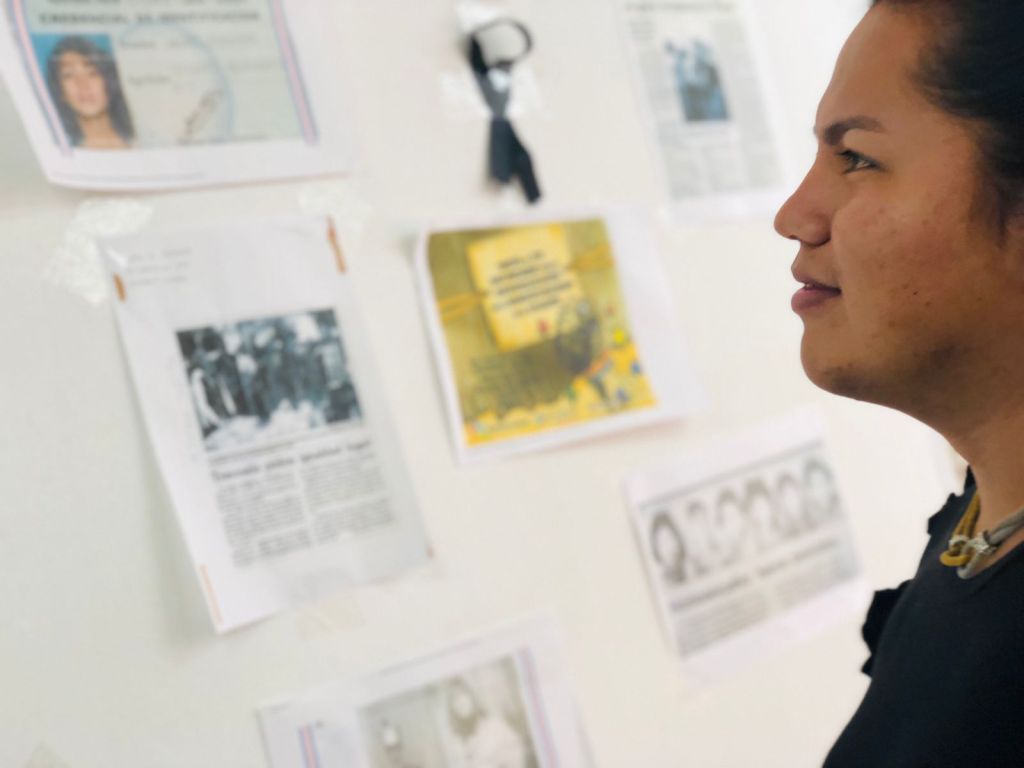
In 2026, a first recovery phase rescued visual material from Silueta X’s former Facebook archive. This selection includes only pieces transferred to the historical repository at museotrans.wordpress.com that directly relate to Article 516, the signature campaign and the public mobilization for decriminalization.


An open archive
Do you have a clipping, photograph, name or testimony from 1997?
Ecuador’s LGBTQ+ historical record is still incomplete. Silueta X can receive documentary contributions to verify, preserve and, when appropriate, incorporate with attribution and consent.
Research and sources

