Trans Women in Ecuador’s Prisons | PrisioTrans Human Rights Program

PrisioTrans · Prison Rights · Gender Identity · Ecuador

Trans Women in Ecuador’s Prisons

A prison sentence restricts liberty. It does not erase gender identity, health, bodily integrity or human dignity.

PrisioTrans brings together Asociación Silueta X’s prison-rights work documented since 2011 and publicly identified under the PrisioTrans name by 2022. The program focuses on trans women deprived of liberty, connecting gender identity, safe placement, anti-torture documentation, health, rehabilitation and State accountability.

Safety before labels: PrisioTrans does not advocate a one-size-fits-all prison placement rule. Inter-American standards support individualized decisions that consider gender identity, specific risks, the person’s own safety assessment and informed consent.
Community activity with trans people deprived of liberty at Penitenciaría del Litoral, PrisioTrans archive in Ecuador
PrisioTrans archive · Penitenciaría del Litoral, 2023. Dignity and community ties are also part of social rehabilitation.

A largely hidden layer of Ecuador’s structural prison crisis

The Inter-American Commission on Human Rights has described Ecuador’s prison crisis as serious and structural. In January 2026, it granted precautionary measures for people detained at Guayas No. 1 because of serious and urgent risks to life, personal integrity and health. For trans women, these system-wide risks may intersect with gender-identity discrimination, prison placement, sexual violence, forced suppression of gender expression and barriers to health care.

From historical interventions to a permanent rights program

Seven pillars for what happens behind prison walls

Silueta X’s accumulated experience can be organized into a monitoring, prevention, support and policy model grounded in trans and intersectional human-rights practice.

01 · Identity

Name, gender and expression

Promote respect for names, pronouns, gender expression, hair, clothing and bodily integrity. Incarceration does not authorize forced masculinization.

02 · Safe placement

Individual risk assessment

Advocate for individualized housing and transfer decisions that seriously consider gender identity, safety concerns, the person’s own views and informed consent.

03 · Health

HIV, STIs and continuity of care

Prevention, condoms, lubricant, testing, treatment, mental health and continuity of trans-appropriate health care, including specialized treatment when needed.

04 · Anti-torture

Document without increasing danger

Receive alerts, preserve evidence and seek independent investigation of alleged beatings, sexual violence, humiliation, forced head shaving, threats and other ill-treatment.

05 · Rehabilitation

Equal access and reintegration

Promote equal access to education, work, recreation, entrepreneurship, prison programs and tools for social reintegration.

06 · Policy

Protocols and accountability

Turn repeated cases into protocol proposals, institutional training, disaggregated data, State responses and non-recurrence measures.

07 · Community

Maintain human connection

Community activities and external networks can counter the isolation that intensifies violence, exclusion and barriers to rehabilitation.

2011–2026 · A documented prison-rights trajectory

Fifteen years of warning signs that should not be read as isolated incidents

2011 · A trans voice from Penitenciaría del LitoralSilueta X published a first-person prison video addressing human-rights protection, quality of life, sexual health, HIV/STI prevention and the lack of condoms in a Guayaquil prison.
2014–2015 · Reintegration and prison trainingSilueta X worked with Ecuador’s then Ministry of Justice on microenterprise activities for trans people deprived of liberty and later on sexual-diversity training involving prisoners, prison officers, police and administrative staff.
2016 · LGBT prison protocols enter the national agendaSilueta X’s institutional archive records its coordination role. Independently, the IACHR welcomed Ecuador’s July 2016 decision to develop protocols for LGBT people deprived of liberty.
2021 · Helen MaldonadoHelen Maldonado, a trans woman, died during the November prison massacre at Penitenciaría del Litoral. Her case helped expose the risks created when trans women are held in male prison spaces without adequate consideration of gender identity and safety.
2022 · The PrisioTrans name appears publiclyA complaint concerning alleged cruel, inhuman and degrading treatment of trans women in Lago Agrio was issued through #PrisioTrans. Silueta X then published a response from the Ministry of Women and Human Rights.
2023 · Sexual health and community tiesPrisioTrans delivered STI prevention sessions on condoms, lubricant, testing and medical care in the priority pavilion known as “Brisas de Libertad,” while maintaining community contact with trans women at Penitenciaría del Litoral.
2024 · Forced hair cutting and targeted bodily violence allegedSilueta X reported allegations of beatings, threats, forced head shaving and violence directed at breast or body implants. Independent reporting later documented testimonies of sexual abuse, denial of gender identity, HIV/TB health barriers and military mistreatment. These allegations require independent investigation.
2025 · The issue reaches peer-reviewed legal and human-rights researchEcuadorian academic journals published dedicated research on trans women in prison, male-facility placement, gender identity and the consequences for personal integrity, equality and non-discrimination.
2026 · “La Bonita” and the El Encuentro maximum-security prisonThe death in State custody of a 23-year-old trans woman prompted Silueta X to call for an independent investigation and answers about gender-differentiated safeguards. The case entered international coverage of conditions at El Encuentro.
2011 video documenting trans realities inside a prison in Guayaquil, Ecuador

Audiovisual archive · 2011

Before Ecuador’s “prison crisis” became a global headline, a trans prisoner was already describing what was missing

The historical video published by Silueta X documented rights concerns, quality of life, HIV/STI prevention and a stark sexual-health reality: the lack of condoms meant abstinence was described as a form of protection inside prison.

Open the 2011 archive →

The critical question: identity and placement

The answer cannot be reduced to “men’s prison or women’s prison?”

A rights-based policy must ask where each person is safest, how gender identity will be respected and what risks a placement decision creates. Recent Ecuadorian research aligns with Inter-American standards that reject automatic placement based solely on sex assigned at birth.

Inter-American standard

Safety + voice + informed consent

Inter-American Court Advisory Opinion OC-29/22 calls for differentiated approaches for LGBT people in detention. Ecuador-focused research applying that standard highlights case-by-case placement, individual circumstances, safety preferences and informed consent.

A documented legal gap

Sex is not the same as gender identity

A 2025 academic analysis observed that Ecuador’s statutory separation principle referred to sex or sexual orientation while omitting gender identity and expression, a relevant gap when assessing prison placement for trans women.
2024 · Gender identity can be attacked through the body

Forced head shaving, attacks on implants and sexual violence are not administrative details

In 2024, Silueta X published allegations of forced head shaving, beatings and threats against trans women in prison. An independent investigation supported by the Pulitzer Center documented separate testimonies involving hair cutting, threats against implants, alleged sexual violence, tuberculosis, HIV and denial of gender identity during military prison operations. Allegations of this gravity require independent investigation and safeguards against retaliation.

Health is also part of identity

There is no rehabilitation without continuity of care

PrisioTrans work includes HIV/STI prevention, correct condom and lubricant use, testing information and pathways to medical care. Inter-American standards also connect respect for trans identity with adequate, specialized health care while a person is deprived of liberty.

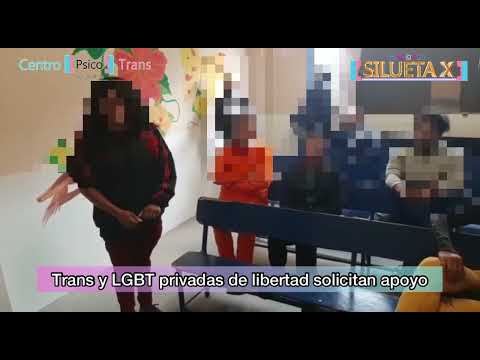
Silueta X video archive on trans people and imprisonment in Ecuador

Cases that changed the conversation

Helen Maldonado and “La Bonita”: different moments, the same question of State protection

2021 · Penitenciaría del Litoral

Helen Maldonado

Helen was among those killed during the November 2021 prison massacre. Her case prompted renewed scrutiny of LGBTQ+ protection in Ecuadorian prisons and later became the subject of academic research on gender identity, violence and prison placement.

2026 · El Encuentro, Santa Elena

“La Bonita”

A 23-year-old trans woman died in State custody in May 2026 after transfer to the El Encuentro maximum-security prison. Silueta X called for an independent investigation, forensic transparency and answers concerning gender-differentiated safeguards. The case was later included in EL PAÍS English coverage of the prison.

International media & donor brief

A trans rights blind spot inside one of Latin America’s most severe prison crises

Ecuador’s prison crisis is internationally documented. What remains far less visible is how general prison violence intersects with gender identity: where trans women are held, whether their identities are recorded and respected, whether they retain access to appropriate health care, and whether anti-trans violence can be independently documented and investigated.

Protection

Anti-torture monitoring

Confidential case intake, risk assessment, evidence preservation, legal referrals and follow-up on alleged torture or sexual violence.

Health

HIV, TB and trans health

Document access barriers, support prevention, strengthen referrals and protect continuity of essential treatment.

Evidence

Trans prison data

Build privacy-protective data on placement, health, violence, transfers, deaths in custody and access to rehabilitation programs.

Reintegration

Life after detention

Connect people leaving prison with identification, health, mental-health, housing, employment and community support.

PrisioTrans alert

Is a trans person in detention at immediate risk?

Protect the person’s safety first. Do not post sensitive information or confront prison personnel if doing so could trigger retaliation. Preserve dates, detention location, legal and medical documents, and lawfully obtained evidence.

Sources and standards

PrisioTrans sits at the intersection of community evidence, journalism, research and international law

PrisioTrans · Asociación Silueta X

No criminal sentence should become a sentence against someone’s gender identity.

A prison under State control is also a place where the State must prove that human rights still exist.

PrisioTrans · Trans Women in Ecuador’s Prisons · Asociación Silueta X. Historical archive and human-rights program focused on gender identity, health, anti-torture documentation, safe prison placement, rehabilitation and accountability.

Allegations and advocacy statements are not presented as judicial findings. Where possible, this page distinguishes survivor or civil-society reports from official actions, independent journalism, academic research and international human-rights standards.

PrisioTrans does not replace prison authorities, health services, courts or investigative bodies. Public documentation must prioritize the safety, privacy and informed consent of people deprived of liberty.

Updated: August 2026.