

Ageing with pride
Ageing does not erase sexual orientation, gender identity, personal history or the right to keep making decisions.
Older Adults X takes a rights-based, life-course, healthy-ageing, autonomy and intersectional approach. In Ecuador, the Organic Law on Older Persons defines an older person as someone aged 65 or over. The program uses that legal benchmark for its core population without reducing people to their age or assuming that ageing automatically means dependency.
A double invisibility
Being older does not make someone less LGBTQ+. Being LGBTQ+ does not make someone less of an older person.
Ageing can add another layer of discrimination to exclusion accumulated over decades. For trans and LGBTQ+ older persons, this can affect relationships, health, income, housing, care, participation and the ability to remain visible without fear.
Lived experiences shaping the program
We do not design ageing from a checklist. We build from lives that are already being lived.
The archives of Silueta X and partner organizations reveal different but connected experiences: surviving criminalization, working without social protection, facing abandonment, carrying collective memory and continuing to participate in public life.
Memory · criminalization
Growing older after Article 516
In 2022, Silueta X organized a public conversation marking 25 years since the decriminalization of homosexuality. Participants included Gonzalo Abarca, a bisexual activist and survivor of the former criminalization regime, who was identified at the time among LGBTQ+ older persons. The memory of people who lived through state repression is part of Ecuador’s democratic history.
Work · pensions · poverty
Reaching later life without economic security
Años Dorados leadership has documented concerns about LGBTQ+ older persons without a trade, stable employment or sufficient income, including people who reached later life after decades of labor-market exclusion. In 2025, a national gathering involving Silueta X worked on a proposal for a universal basic pension for LGBTQ+ older persons in vulnerable situations.
Abandonment · mental health
When the support network breaks down
Centro Psico X reported an increase in consultations involving older persons experiencing abandonment in 2025, representing 9% within its annual record. Mental health, loneliness and rebuilding support networks are therefore central components of the program.
Violence · transfemicide
Violence does not end with age
In 2020, Silueta X documented through Runa Sipiy the killing of Konny Valarezo, an older trans woman, and called for an investigation together with Años Dorados GLBTI. The case illustrates how ageism, transphobia, intimate-partner violence and institutional neglect can overlap.
Identity · employment history
Our records age with us too
The National Diversity Agenda discussed in 2025 addressed the updating of trans people’s identity information across employment records. For an older trans person, a lifetime of inconsistent names or identity data can become an additional barrier when seeking to prove contributions, work experience, labor rights or access to social protection.
Memory · legacy
We are not only beneficiaries: we are living archives
Older persons hold memories of police raids, social spaces, political organizing, decriminalization and the building of rights. Older Adults X connects these memories with the Trans Memory Museum, institutional archives and intergenerational activities so that history does not depend only on written records.
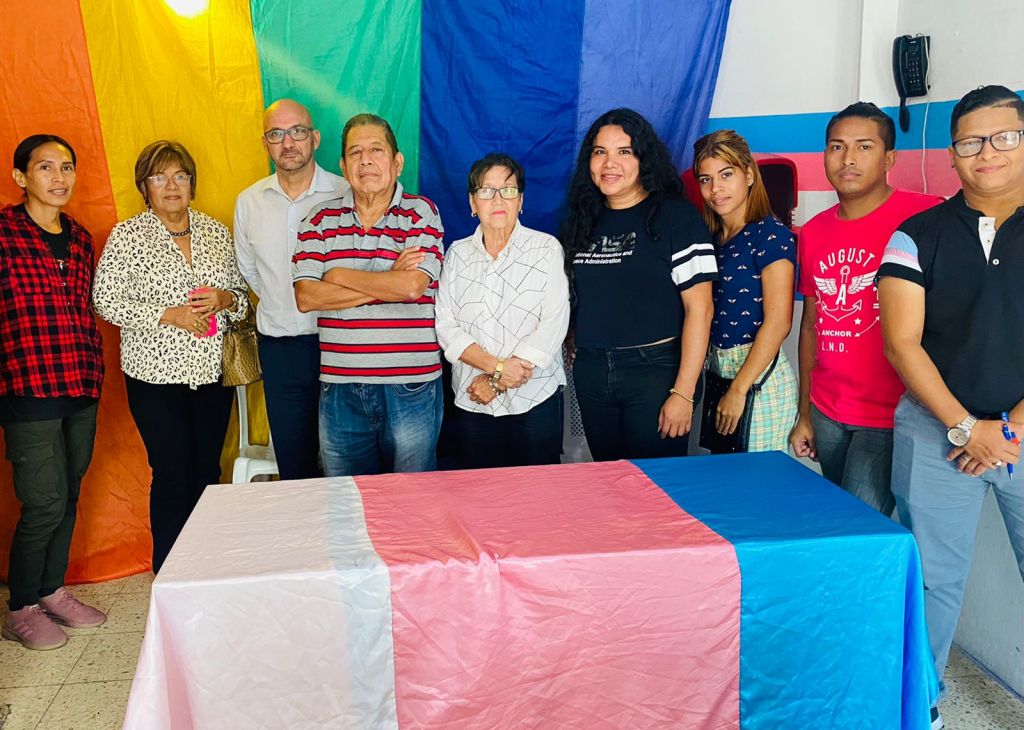
Documented track record
From opening Casa Arcoíris to advocating for pensions, mental health and dignified ageing
2008–2022 · memory and rights
Recognizing those who opened the way
Silueta X has sustained a practice of recognizing activists and survivors connected to the decriminalization of homosexuality, culminating in 2022 with a dedicated public conversation designed to preserve that memory.
2018 · Casa Arcoíris
A community space explicitly open to LGBTQ+ older persons
Casa Arcoíris explicitly invited LGBTQ+ older persons to rights workshops, sexual-health activities, social gatherings, community meals, integration activities and reporting mechanisms.
2020 · participation and justice
Coalition with Años Dorados LGBTI
Silueta X and the Años Dorados LGBTI Older Adults Association jointly participated, alongside other organizations, in a constitutional action concerning equal participation in the LGBTI Consultative Council.
2020 · pandemic
Abandonment could no longer remain invisible
During COVID-19, national statements from networks connected with Silueta X identified “abandoned diverse older persons” among the realities made more visible by the emergency.
2020 · violence
Runa Sipiy documents the killing of an older trans woman
The case of Konny Valarezo was documented and publicly denounced by Silueta X with participation from Años Dorados GLBTI, bringing age and gender identity into the analysis of extreme violence.
2022 · National Trans Summit
Trans ageing enters the national agenda
The Second National Trans Summit included Adultos Mayores GLBTI among participating organizations and called for social services and subsidies that prioritize intersectional conditions, including being an older trans person.
2025 · social protection
Universal basic pension
At the National Gathering of LGBTQI+ Leaders, supported among other organizations by Silueta X, participants worked on a proposal for a universal basic pension for LGBTQ+ older persons experiencing vulnerability.
2025 · active ageing
Challenging ageism without infantilizing older people
On the International Day of Older Persons, Silueta X and Cámara Plus connected rights, labor inclusion, experience, productivity and the economic sustainability of older persons.
2025–2026 · mental health
Centro Psico X addresses vulnerability and abandonment
Centro Psico X expanded its services to older persons experiencing social vulnerability and reported consultations related to abandonment, integrating telepsychology, individual therapy, crisis care, support groups and psychoeducational workshops.
2026 · autonomy and community
Learning, creating and continuing to contribute
A technical pastry and decorative-sugarcraft workshop included older adults with a focus on fine motor skills, mental health and community integration, linking ageing with creativity and autonomy.

Mental health · psychogerontology · social connection
Not every form of exhaustion is “just part of ageing.” Not every experience of loneliness should be accepted as inevitable.
Centro Psico X brings an established psychological-care capacity to the program. Older Adults X also prioritizes grief, abandonment, anxiety, depression, loneliness, violence, caregiver stress, life transitions and the cumulative effects of discrimination.
Health · sexuality · HIV · bodily autonomy
Sexuality does not retire
Older persons continue to have the right to intimacy, affection, sexuality, information and free decisions about their health. Casa Arcoíris already included sexual health within spaces open to LGBTQ+ older persons. Older Adults X updates that approach through HIV and STI prevention, support around chronic conditions, informed consent and respectful referral to health services.
Information, prevention, testing and linkage to VIHX and health services when appropriate.
Coordination with primary care, chronic-disease care, mobility support, mental health and rehabilitation.
Respect for informed decisions, intimacy, bodily autonomy and the wishes of the older person.

Older Adults X program architecture
Twelve pathways for living longer without losing rights along the way
01 · Community
Social connection and safe spaces
Gatherings, discussion circles, support groups, chosen support networks, community activities and peer accompaniment.
02 · Wellbeing
Mental health and psychogerontology
Loneliness, grief, depression, anxiety, abandonment, self-esteem, crisis, trauma and strengthening support networks.
03 · Protection
Violence, abuse and abandonment
Risk identification; physical, psychological, sexual, property-related or financial abuse; neglect, abandonment and safe referral.
04 · Health
Comprehensive health, HIV and sexuality
Prevention, information, sexual health, HIV/STIs, chronic conditions, bodily autonomy and referral to services.
05 · Justice
Identity and access to rights
Identity documents, gender identity, employment records, reporting, property, intimate relationships and referral to Consultorio Jurídico X.
06 · Social protection
Pensions and economic security
Advocacy for adequate pensions, guidance on benefits, reduction of administrative barriers and documentation of gaps.
07 · Autonomy
Work, skills and entrepreneurship
Training, recognition of prior learning and skills, voluntary entrepreneurship, inclusive employment and action against age discrimination in the workplace.
08 · Care
Chosen support networks and long-term care
Information, accompaniment and referrals for care that respects identity, privacy, consent, partners and chosen support networks.
09 · Housing
Housing and prevention of homelessness
Identification of eviction, abandonment or homelessness risks and connection with available support networks and services.
10 · Technology
Digital inclusion and safety
Using mobile phones, public services, banking, telepsychology and communication safely, with privacy and fraud prevention.
11 · Memory
Oral history and intergenerational legacy
Testimonies, archives, trans memory, recognition of activists, culture, intergenerational dialogue and knowledge transmission.
12 · Voice
Participation, evidence and advocacy
Advisory spaces, assessments, research, data, direct participation by older persons and public-policy proposals.
Identity-affirming care
No one should have to go back into the closet to receive care
Long-term care must recognize partners, friends, diverse families and real support networks. The Inter-American Convention on Protecting the Human Rights of Older Persons protects autonomy, privacy, intimate relationships, health, identity, participation and a life free from violence, and explicitly recognizes sexual orientation and gender identity in situations of multiple discrimination.
the right to decide where to live, whom to live with, what care to accept and who participates in personal decisions.
name, pronouns, gender expression, privacy and continuity of treatment respected in every care setting.
practical recognition of partners, friends, chosen family and trusted people without imposing a single model of family.
Alignment with international frameworks
Healthy ageing + LGBTQ+ rights + inclusive care
Older Adults X aligns with the UN Decade of Healthy Ageing and the Inter-American human-rights system, both of which call for specific responses to ageism, isolation, violence and intersectional discrimination.
These references indicate conceptual and programmatic alignment only. They do not imply funding, accreditation or an institutional relationship with WHO, the OAS or the IACHR.
One entry point, multiple capacities
Older Adults X connects services without fragmenting the person
Monitoring, Evaluation & Learning
Counting years lived is not enough. We need to understand how those years are lived.
The program proposes indicators on safety, connection, wellbeing, autonomy and participation while applying confidentiality and data minimization to sensitive information about sexual orientation, gender identity, health and family or support networks.
support networks, participation and reduced isolation.
violence identified, pathways activated and cases supported.
access to mental-health support and perceived support and autonomy.
benefits, income, employment, training and voluntary entrepreneurship.
safe use of public services, banking, communication and remote care.
testimonies, archives, intergenerational activities and recognition.
older persons co-designing, leading or evaluating activities.
proposals on pensions, care, health, identity and public policy.
Technical and intergenerational partnerships
A diversity policy that ends at age 60 is not a diversity policy
Older Adults X can work with older-person organizations, gerontology services, public health systems, universities, local governments, LGBTQ+ networks, companies, caregiver organizations and international cooperation partners to develop inclusive ageing responses.
Health and care
Inclusive services
Training on sexual and gender diversity, mental health, consent, chosen support networks and person-centered care.
Social protection
Income and pensions
Research on pension gaps, informal employment, employment documentation and economic-security models.
Memory and evidence
Listen before designing
Oral history, participatory assessments and evidence on LGBTQ+ and trans ageing to design policy and services from lived experience.
Archive and traceability
A track record that can be traced
Historical rigor
A history of collaboration that can now be organized as a program
The archive does not show that Silueta X operated an independent program called “Older Adults” from its earliest years. It does show sustained relationships with LGBTQ+ older persons and older-person organizations, inclusive community spaces, historical memory, advocacy, documentation of violence and more recent capacities in mental health and economic autonomy. Older Adults X brings those documented strands together within a coherent program architecture.
Lived experiences: personal cases are used to understand structural needs, not to exploit suffering as a communications asset.
Capabilities: physical-health, long-term-care, housing and social-protection pathways require coordination with public or specialized services; they are not presented as direct clinical or financial benefits that Silueta X has not documented.

