
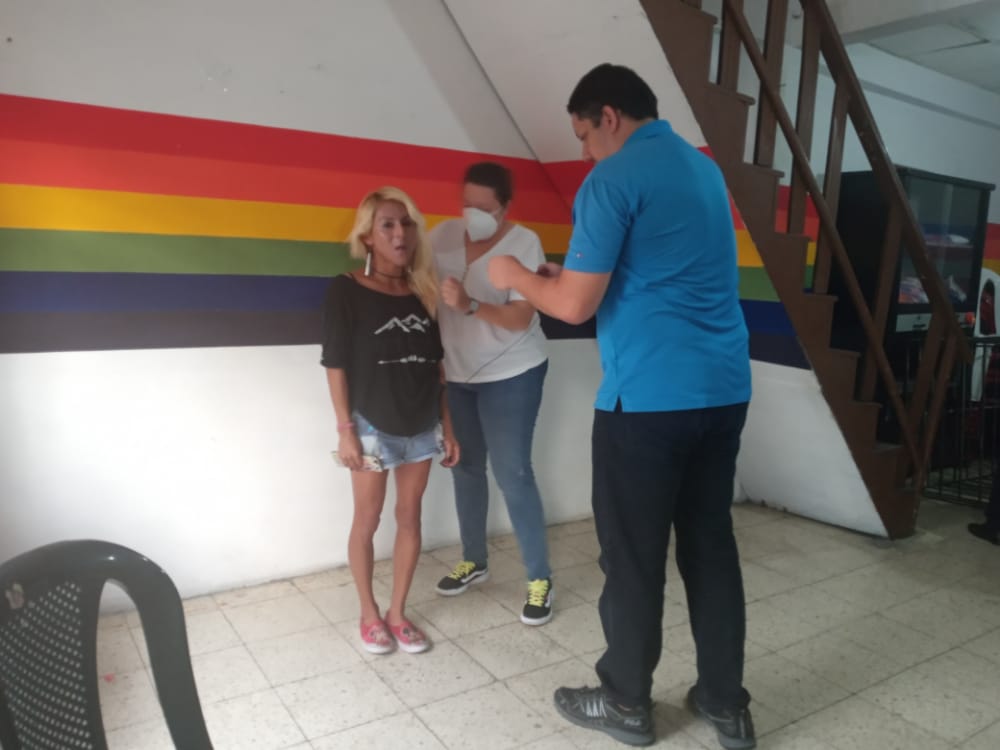
A strategic distinction
Tech Labs X manages talent. Media & Storytelling X turns social experience into public memory.
Tech Labs X remains the entry point for university interns, volunteers and professionals. Media & Storytelling X operates as a specialized satellite program: the goal is not to “help with social media,” but to research, interview, document, produce, edit, archive and distribute verifiable stories.
The expected result is not a collection of isolated posts. It is a reusable audiovisual knowledge base: master interviews, properly tagged photography, B-roll, audio archives, transcripts, scripts, digitized documents, finished pieces and materials ready for press, research, training, advocacy, reporting and future productions.
The challenge we are addressing
We have years of history. Not all of that history yet has the images, voices and archives it deserves.
Silueta X has produced reports, public statements, legal cases, campaigns, research, community initiatives, memory projects and field-based processes. Many can be reconstructed through the people who lived them, press archives, photographs, case files, institutional records and new interviews.
Documented track record
Silueta X has spent years engaging with cameras, journalists, testimony, archives and media representation
Media & Storytelling X does not invent a new vocation; it organizes accumulated experience and addresses a persistent gap: turning it into a permanent audiovisual documentation capacity.
2011 · university documentary
An early lesson in who controls the narrative
A university documentary about Silueta X prompted an institutional concern: trans participants had contributed their experiences, yet technical perspectives and important parts of their statements were not adequately represented in the final edit. That experience now reinforces the need for editorial briefs, contextual guidance and informed participation.
2013–2014 · media and stereotypes
Communication can also cause harm
The “Make Me Laugh Intelligently” campaign and later actions challenging discriminatory television content placed Silueta X in public debate about humor, stereotypes and media responsibility. A complaint concerning a television program ultimately led to a public apology.
2020 · Trans Memory Museum
Archiving is also communication
The virtual museum developed by Silueta X brought together photographic galleries, press archives, personal accounts, memories and articles. Recovering that history required researching press collections and turning scattered records into an accessible public narrative.
2021 · testimonies
Voices on discrimination and violence
The institutional archive documents testimonies from LGBTQ+ and trans community members about their lives, discrimination and experiences of acceptance. Media & Storytelling X turns this kind of recording into an ongoing, technically preserved documentation practice.
2024–2026 · evidence-based media work
Reports, press briefings and audiovisual assets
Public presentations of Runa Sipiy and recent cases show a media-relations practice grounded in data, documents, testimony, interviews and coverage. In 2026, for example, an institutional media call explicitly listed testimonial video, photographs, scanned documents and live coverage among materials available to journalists.
Today · Silueta X News
From local communication to international content
The English-language Silueta X News platform publishes news, reporting and advocacy updates for international audiences. Media & Storytelling X can supply that ecosystem with photography, interviews, video, audio, archives and reusable multimedia packages.
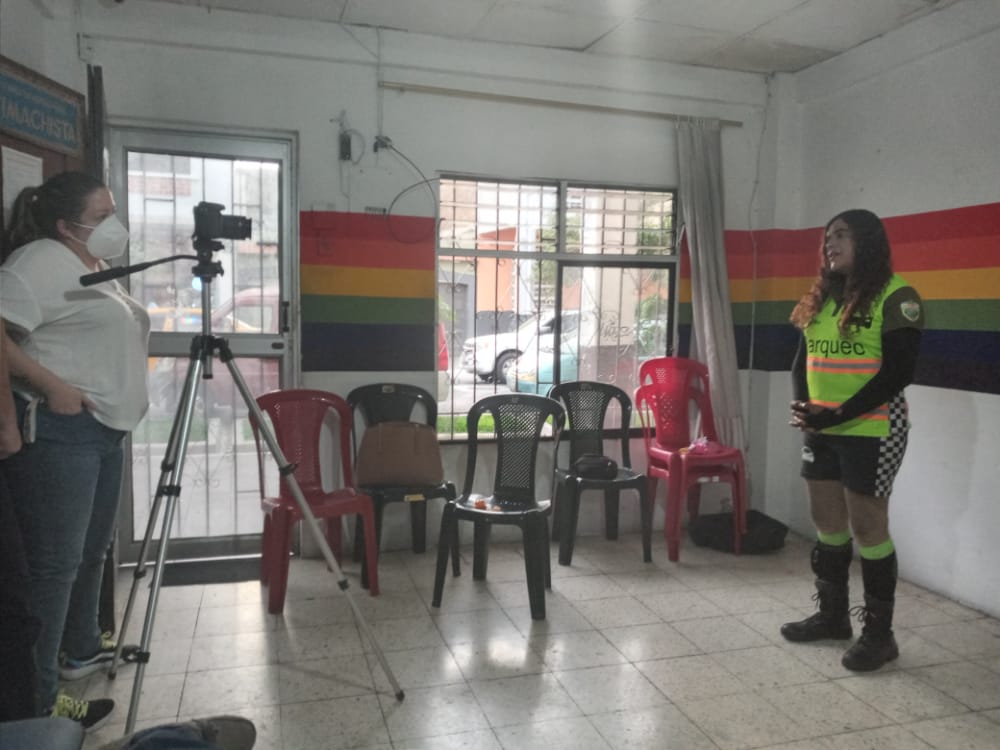
Methodology · Territory-to-Story
Fieldwork → evidence → interview → story → archive → impact
We do not begin by asking, “What video should we make?” We begin by asking which story needs to be documented, who can tell it, what evidence exists and which format best serves the purpose.
Review reports, articles, timelines, case files, photographs, sources and background before recording.
Objective, questions, framing, audience, risks, permissions, format and deliverables.
Interviews, photography, video, ambient sound, B-roll, documents and observation.
Separate testimony, allegation, documentary evidence, verified facts, context and narrative reconstruction.
Transcription, timecodes, keywords, interviewee profile and usage permissions.
Find the narrative arc, context and rhythm without altering facts or forcing testimony to fit a predetermined story.
Editing, sound, color, subtitles, graphics, animation, accessibility and platform-specific versions.
Master files, originals, licenses, metadata, consent records, transcripts and backups.
Web, social media, press, festivals, universities, events, advocacy and partner channels.
Use, reach, reuse, media pickup, learning, advocacy value and preservation of memory.
Two complementary workflows
Systematize what we already know. Record what can still be told.
Workflow A · Evidence-to-Story
From reports and archives to audiovisual narratives
We begin with research, reports, press archives, case files, timelines, photographs and existing documentation. The team identifies protagonists, audiovisual gaps and elements that require new interviews or contextualization.
Possible outputs: archive-based documentaries, video essays, audiovisual timelines, micro-documentaries, explainers, documentary podcasts, oral-history archives or educational pieces.
Workflow B · Territory-to-Story
From people and place to first-source documentation
Student and professional teams receive a defined editorial assignment and document testimony, places, processes, events and current contexts. Material is preserved even when there is not yet a finished production attached to it.
Possible outputs: master interviews, B-roll, portraits, reported features, photo essays, short films, observational documentaries, event documentation, oral history and press packages.
Production formats
One story can live in several formats without becoming disposable content
AI-assisted media · archives · transparency
AI can help tell a story. It must never fabricate the evidence behind that story.
Media & Storytelling X can produce archive-based documentaries using voice-over, historical photographs, video, documents, screenshots, graphics, maps and, where it adds value, generative media. The condition is a visible boundary between authentic records, reconstruction, illustration and AI-generated or AI-modified material.
prioritize original material, press archives, testimony and verifiable records before generating synthetic imagery.
disclose when an image, voice, animation or reconstruction was generated or materially modified with AI.
generated material is never presented as documentary proof of a real event, person or scene.
preserve metadata, sources, licenses and, when available, Content Credentials/C2PA provenance.
avoid synthetic re-creations of victims, children or deceased people where they could confuse, sensationalize or undermine dignity.
transcription, subtitling, archive search, translation, audio cleanup, organization and previsualization under human review.
This approach is informed by Partnership on AI’s Responsible Practices for Synthetic Media and the C2PA provenance and Content Credentials standard. These are methodological references, not institutional affiliations.
Talent pathway
We need people who can listen, research and produce — not only publish
Applications are managed through Tech Labs X. Communication profiles receive clearly scoped assignments, editorial guidance and concrete deliverables linked to real Silueta X processes.
Students and interns
Professional learning through real stories and fieldwork
Social Communication, Journalism, Film, Audiovisual Production, Multimedia, Photography, Design, Animation, Sound, Digital Communication and related disciplines.
Contributors may work on research, field interviews, production, camera, still photography, sound, transcription, scripting, editing, archives, subtitles, motion graphics and distribution.
Socially responsible professionals
Mentorship and quality that raise the standard
Documentary filmmakers, journalists, producers, cinematographers, sound professionals, editors, colorists, archivists, researchers, writers, photographers, animators, impact producers and AI-media specialists.
Professional contributions may include mentoring, editorial review, supervision of a specific production, technical training, pro bono production or support for projects with festival or funding potential.
Field documentation teams
Taking a camera into the field also requires protocol, safety and editorial responsibility

Program architecture
Twelve lines for turning memory and evidence into durable narrative assets
01 · Fieldwork
Interviews and life stories
Field reporting, testimony, oral history and documentation of community processes.
02 · Research
Narrative systematization
Turn reports, case files and timelines into stories and audiovisual structures.
03 · Documentary
Short films and documentaries
Observational, testimonial, historical, archival and investigative production.
04 · Photography
Visual documentation
Portraiture, photo essays, events, territory, processes and an institutional image bank.
05 · Audio
Podcast and sound-based storytelling
Interviews, ambient sound, archival audio, narration and audio production.
06 · Press
Media kits and B-roll
Testimonies, photographs, video, background notes, graphics and ready-to-use material for journalists and partners.
07 · Archives
Audiovisual memory
Cataloguing, metadata, transcripts, licenses, preservation and retrieval.
08 · Visualization
Making evidence visible
Infographics, motion design, maps, timelines and explainers connected to research.
09 · AI Media
Responsible hybrid production
AI for assistance, clearly labeled illustrative reconstruction and synthetic media with documentary safeguards.
10 · Accessibility
Content more people can use
Subtitles, transcripts, audio description, plain language and multi-format versions.
11 · Distribution
Audiences and impact
Press, web, social platforms, festivals, universities, events, advocacy and partner organizations.
12 · Capacity building
Learning through production
Internships, mentoring, academic credit where agreements exist and professional portfolios based on real social-impact work.
Ethics · consent · do no harm
A powerful story never justifies putting the person who made it possible at risk
The program works with LGBTQ+ people, trans communities, women who have survived violence, children and adolescents, migrants, people in conflict with the law, victims and families. Documentation must protect identity, dignity and safety before pursuing a dramatic image.
A fundable organizational capacity
Documenting impact is also institutional infrastructure
The international media and documentary ecosystem funds production, capacity building, memory, freedom of expression, public-interest media and social-justice documentary. Media & Storytelling X demonstrates that Silueta X has stories, field access, evidence and a structure for turning them into responsible productions and donor-ready communications.
Social justice documentary
Stories with depth and purpose
Documentary projects that preserve memory, surface inequality and connect storytelling with social change.
Media development
Capacity, pluralism and access
Training, production and communication capacity-building rooted in civil society and historically underrepresented communities.
Impact storytelling
Productions that continue working after release
Distribution, conversations, education, advocacy, media engagement and partnerships that give a story a public life beyond publication.
Ecosystem references: Ford Foundation JustFilms supports documentary and emerging media focused on social justice; UNESCO’s IPDC supports media development projects involving civil society and academia; and Doc Society has developed tools specifically for documentary impact. These references indicate thematic alignment and sector models, not funding, partnership or automatic eligibility for Silueta X.
Storytelling across programs
Every Silueta X program has stories that can still become audiovisual memory
Monitoring, Evaluation & Learning
An audiovisual library is worth more than a view counter
The program measures not only digital reach, but also reusable assets, institutional-memory coverage, quality, accessibility and subsequent uses of the material.
interviews, hours of B-roll and catalogued photographs.
reports and historical processes converted into scripts or finished pieces.
audio, image, metadata, accuracy and editorial compliance.
subtitles, transcripts and adapted versions.
how often archive material supports press, training, reporting or new productions.
media, festivals, universities, partners and platforms.
students and professionals completing projects and strengthening portfolios.
changes in public conversation, advocacy, learning or preservation of memory.
Universities · media · professionals · funders
We have stories, field access and evidence. We need greater capacity to document them well.
Universities
Practice with purpose
Interviews, reporting, audiovisual theses, short films, documentaries, capstone projects and internships grounded in real social processes.
Professionals and production companies
Technical quality and mentorship
Direction, camera, sound, post-production, mentoring, archives, impact strategy and support for more complex productions.
Funders
Memory and media for social impact
Funding for archives, production, equipment, post-production, accessibility, distribution, capacity building and social-justice documentary.
Archives and references
A narrative capacity grounded in verifiable experience
Institutional rigor
Not all communication is journalism. Not all audiovisual material is evidence. Not all AI-generated media is documentary.
The page distinguishes institutional communication, community documentation, journalism, audiovisual creation and synthetic media. Each production should clearly identify what it is and preserve the distinction between verified facts, testimony, opinion, artistic creation and reconstruction.
Participation: students and professionals enter through Tech Labs X, but every Media & Storytelling X project has a defined brief, editorial direction and deliverables.
Memory: the priority is not to generate more disposable content, but to build material that can remain useful five, ten or twenty years from now.

