

A milestone in democratic representation
Ecuador’s first openly trans candidacy for the National Assembly.
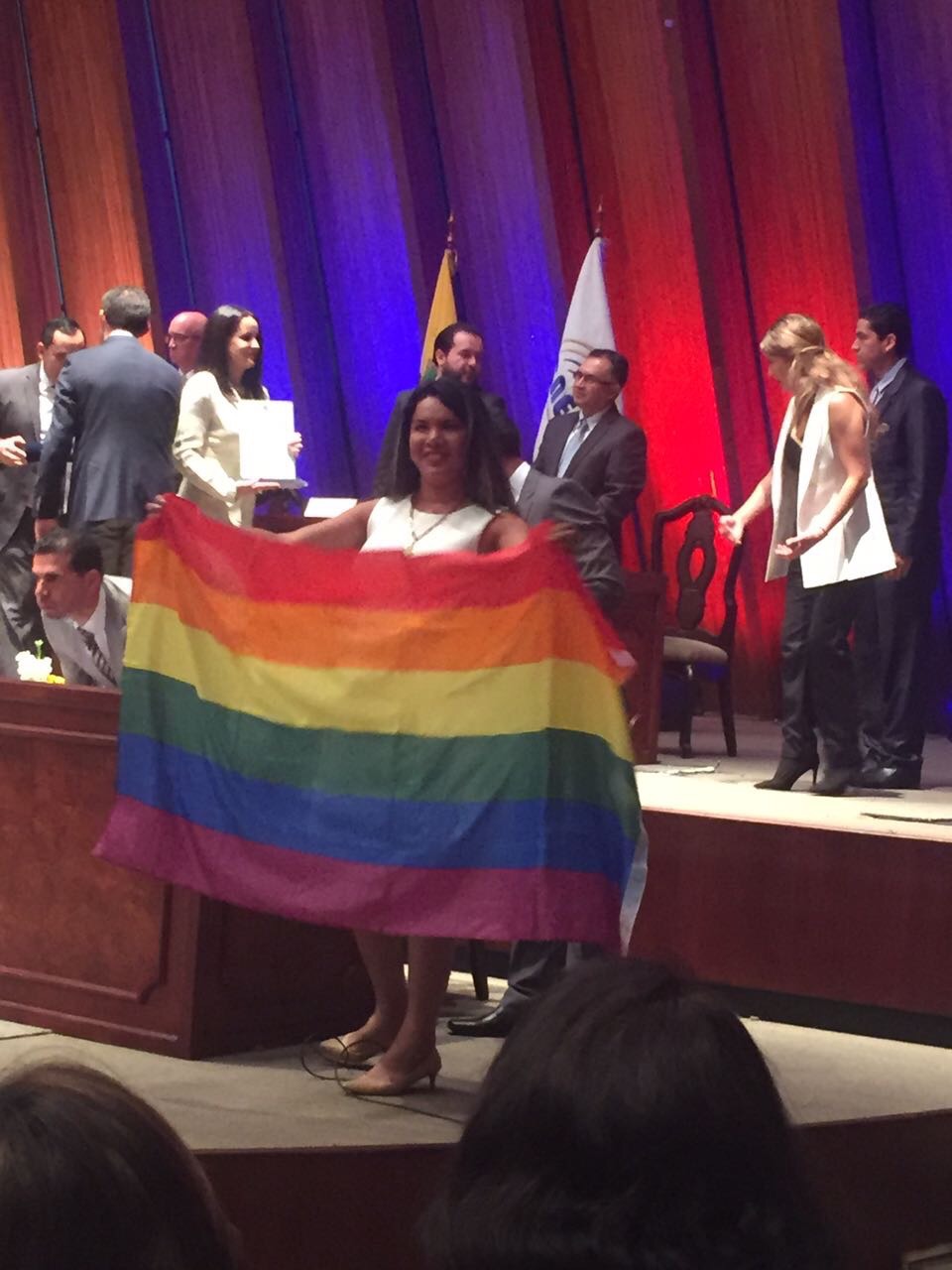
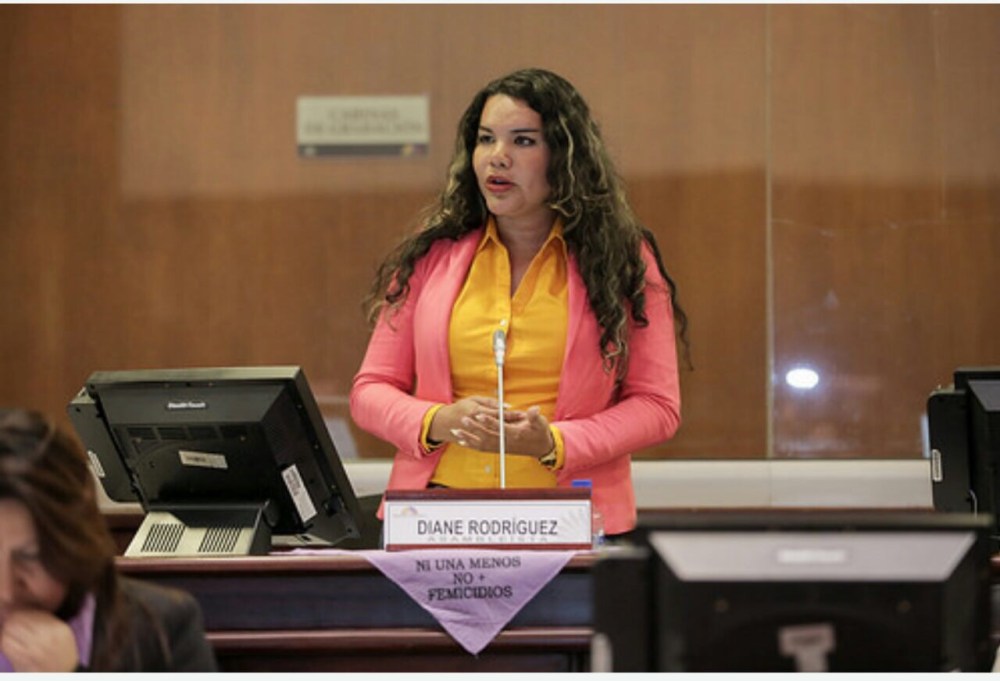
Ecuavisa, La República, and other national outlets documented Diane Rodríguez’s registration as the first openly trans candidate to seek a seat in Ecuador’s National Assembly. More than symbolic visibility, the candidacy placed a trans woman before voters as a potential lawmaker and opened a national debate about who could represent, legislate, and exercise public power in Ecuador.
November 14, 2012 · a door opens
Before asking for votes, the system first had to imagine a trans candidate
The candidacy was registered in an Ecuador where a person’s national ID could still openly contradict their gender identity. Ecuavisa reported that Diane would appear on the ballot under the legal names then recorded on her ID.
Office
National Assembly
This was not a symbolic election inside an organization. It was a popular-election candidacy for Ecuador’s national legislature.
Representation
A trans woman on the ballot
The candidacy turned an identity historically pushed out of decision-making spaces into a visible electoral choice. It compelled political parties, media, institutions, and voters to discuss trans political participation in terms of power, representation, and public leadership.
Election
February 17, 2013
The campaign unfolded during a nationwide general election covering the presidency, National Assembly, Andean Parliament, and provincial representation—giving this milestone unusually broad public visibility.
The campaign agenda
Trans representation, yes. But never a single-issue candidacy.
Contemporary interviews show a platform that combined specific LGBTQ+ demands with social inequalities affecting many other communities.
Identity
Gender marker on the national ID
Recognition of gender identity and legal reforms to end rules that forced trans people to live with identity documents contradicting who they were.
Social equality
Education, health, and employment
Reforms and public policies aimed at reducing the material barriers that pushed trans and LGBTQ+ people out of education, healthcare, and employment.
Families
Marriage equality
Legal recognition of same-sex marriage was already among the political goals expressed during the campaign.
Intersectionality
Women and ethnic communities
AFP reported that Rodríguez also sought to represent minorities, historically marginalized ethnic communities, and feminist causes.
Territory
Services closer to communities
Campaign archives document concerns about bringing health, education, and employment services closer to municipalities and working-class communities across Guayas.
Democratic accountability
Participation and citizen oversight
The platform included citizen-participation mechanisms designed to bring constitutional rights and legislation closer to people who were usually excluded from decision-making spaces.
February 17, 2013 · the electoral paradox
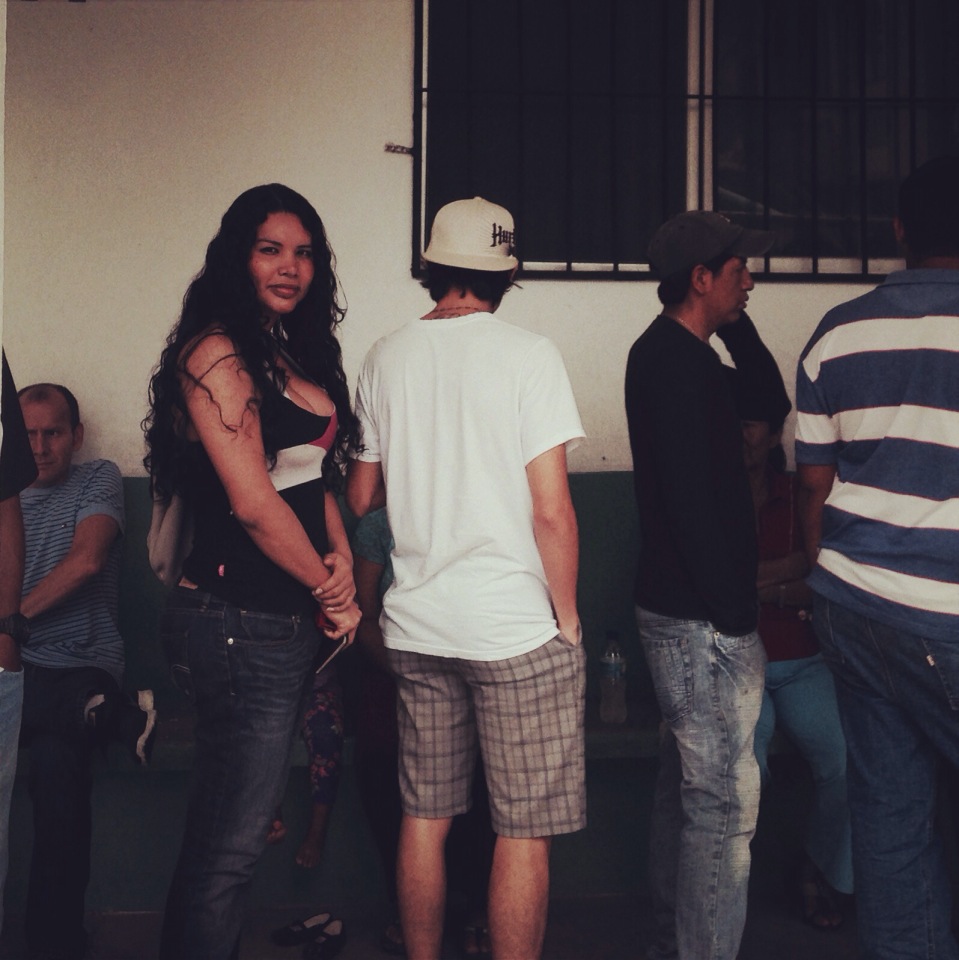
She could appear on the ballot to help write Ecuador’s laws. Yet the electoral system still required her to vote in the men’s line.
Election Day compressed the contradiction of that democracy into a single scene: the state accepted a trans candidacy, while electoral administration still organized polling around a registry marker that did not recognize the candidate’s identity. El Telégrafo documented Diane standing in the men’s line and describing the experience as yet another form of discrimination.
Three years later, the Ecuadorian Federation of LGBT Organizations and the National Electoral Council (CNE) were formally working on non-discriminatory voting, training for polling officials, institutional sensitization, internal party democracy, and civic education. In 2017, after the legal gender-marker change, Diane was able to vote in the women’s line for the first time.
The candidacy crossed borders
Spanish, French, and English coverage turned an Ecuadorian question into a regional one
International coverage framed the candidacy as a leap from grassroots organizing into electoral competition—and as a possible new frontier for trans political representation in South America.
Audiovisual and audio archive
A campaign also survives through voices, images, and sound
Television archive
Ecuavisa · 2012 registrationThe historical page preserves the television record associated with the announcement of her candidacy.Referenced historical video
“National Assembly Candidate · Guayas, District 3”The French article preserves a reference to a YouTube campaign video. We do not invent a video identifier that can no longer be independently verified.Audio archive · Feb. 2, 2013
Campaign jingleiVoox preserves a 3:11 audio piece titled “Vote for Diane Rodríguez, the trans fighter.”The election result
She did not win the seat. The story did not end there.
Diane did not secure a National Assembly seat in 2013. In the weeks that followed, she publicly reaffirmed her decision to remain active in politics and advocacy.
The first campaign became a proof of possibility: a trans person could register as a candidate, walk neighborhoods, defend a platform, answer national and international media, ask for votes, and compete for political legitimacy. That experience remained available for the next electoral cycle—and for Diane herself, who ran again four years later.
2013 → 2016 · from one candidacy to an electoral-inclusion agenda
The question evolved from “Can a trans person run for office?” to “How must elections change to include trans people in practice?”
In May 2016, Ecuador’s National Electoral Council and the Ecuadorian Federation of LGBT Organizations held a working meeting that the CNE itself described as historic, focused on building authentic participation and strengthening democracy through inclusion and equality.
Dialogue with the Civil Registry to reduce barriers, humiliation, and discriminatory treatment when trans people vote.
Training for LGBTQ+ communities to strengthen knowledge and skills for political and electoral participation.
Internal sensitization at the CNE and rights-based training for polling officials, the Armed Forces, and Police on non-discrimination.
Review of internal party democracy to make LGBTQ+ rights meaningful within political organizations—not merely symbolic.
A research line within the Institute of Democracy on the challenges and opportunities facing LGBTQ+ people in electoral processes.
LGBTQ+ technical contributions to civic-education programs such as Ecuador’s ABC of Democracy.
2013–2014 → 2017 · a scene transformed
From voting in a line that denied her identity to voting, in her own words, “with joy” among women
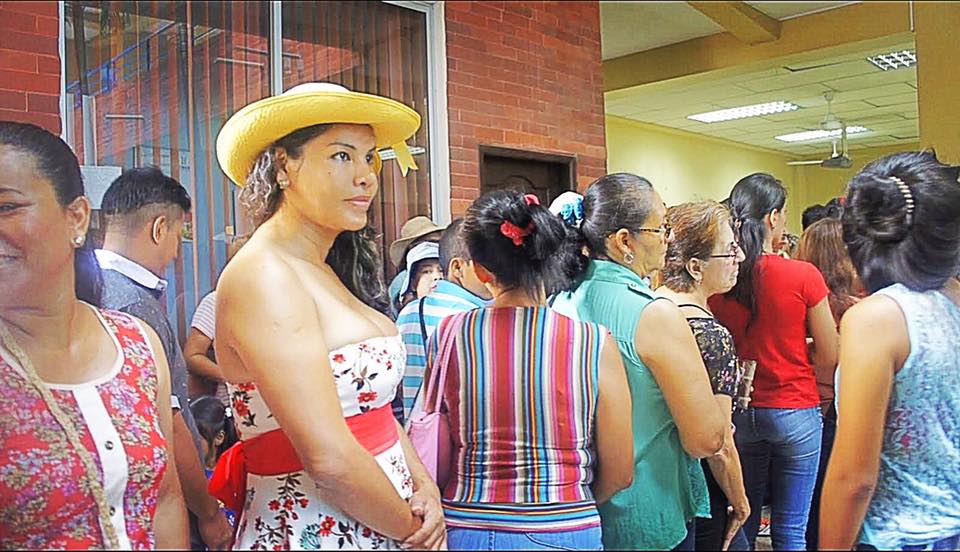
The change can be seen, not only described. Before legal recognition of gender on identity documents, Diane was required to vote in the men’s line. In 2017, after years of advocacy by Diane Rodríguez, Asociación Silueta X, and allied organizations for gender recognition and non-discriminatory voting, she was able to cast her ballot in the women’s line.
The political field began to widen
After 2013, openly LGBTQ+ electoral participation remained limited—but it was no longer exceptionally invisible
Later data do not support claiming that every subsequent LGBTQ+ candidacy resulted directly from Diane Rodríguez’s campaign. They do show a widening field: press accounts recorded more openly LGBTQ+ candidates in 2017 than in previous cycles, and in 2023 Ecuador elected its first openly gay mayor.
2013
A highly visible trans candidacy
The campaign turned political representation and gender identity into national and regional electoral issues.
2017
More openly LGBTQ+ candidates
Later accounts cite fifteen gay men and trans women running for the National Assembly as principal or alternate candidates.
2023
An openly gay mayor
José Arroyo Cabrera won the mayoralty of Pujilí—another marker that sexual diversity was becoming visible not only as an electorate, but also in elected office.
Why this matters to international democracy partners
The 2013 story contains, in miniature, many of the challenges global inclusive-democracy programs are working to solve today
Victory Institute works on LGBTQ+ leadership, candidacies, parties, institutions, and civic participation. NDI emphasizes that democracy is more sustainable when marginalized groups can participate and influence decisions without discrimination or retaliation. GLIDE—an initiative of Outright International, Synergía, and IFES—centers LGBTQI+ people in democratic and decision-making processes.
A trans candidacy encountered documentary barriers, electoral stigma, exclusionary voting procedures, and limited party representation. In the years that followed, some of those barriers became the subject of formal dialogue with election authorities, civic education, procedural change, a new candidacy, and legislative participation. That journey can become methodology, institutional memory, and regional cooperation.
Media, documents, and external validation
Sources for reconstructing the candidacy and its democratic legacy
Memory, sources, and intellectual property
Political history carries more authority when readers can audit the evidence
This page distinguishes among official records, press coverage, institutional archives, historical testimony, and inferences about legacy. It does not claim a direct causal link between the 2013 candidacy and every later LGBTQ+ candidacy in Ecuador.
Third-party images: the 2013 photograph belongs to its original journalistic source and is used here as documentary reference. Any later image hosted on Wikimedia Commons remains subject to the license indicated on its original file page.
Silueta X archive: the research, source selection, chronology, and contextualization presented here form part of Asociación Silueta X’s ongoing work to recover and preserve LGBTQ+ historical memory in Ecuador.
The next candidacy can begin here
Memory is not only about looking back. It can keep the next leader from having to start from zero.
Asociación Silueta X preserves this history as part of a broader agenda for civic participation, political representation, inclusive democracy, and the development of new LGBTQ+ leadership.
Electoral participation
Voto LGBT+ Ecuador
Explore the initiative tracking commitments, political platforms, candidates, public discourse, and LGBTQ+ participation across election cycles.
Explore Voto LGBT+ →Media, research & partnerships
LGBTQ+ Democracy, Leadership & Electoral Inclusion
For media interviews, research collaboration, archive access, leadership development, international cooperation, or funding partnerships focused on LGBTQ+ political participation and inclusive democracy.
Contact Silueta X →Direct support
Invest in the next chapter
Help Silueta X preserve LGBTQ+ political memory, strengthen civic participation, and expand pathways for new leaders in Ecuador.
Support Silueta X →
